
Urban Systems Under Climate Stress
Modern cities were built during a period of relative climatic stability. Urban infrastructure systems, from energy grids and transportation networks to water management and cooling systems, were designed around historical environmental conditions that were assumed to remain broadly predictable over time. This assumption shaped how cities expanded, how risk was modeled, and how infrastructure performance was evaluated.
As stated in the last article, climate change should not be understood as an isolated environmental phenomenon, but as part of a broader process of systemic instability affecting interconnected planetary systems. Cities operate directly within these systems while simultaneously concentrating the physical and economic structures most exposed to disruption. Rising temperatures, prolonged droughts, extreme rainfall, flooding, higher risk of fires, even a minor earthquakes deriving from the consumption of underground water in urban areas, and energy volatility are no longer exceptional events operating outside urban systems. They are becoming structural conditions that increasingly shape how cities function on a daily basis.
This transition is significant because urban infrastructure was not designed for persistent environmental volatility. Most cities were developed under the assumption that climate conditions would remain sufficiently stable for historical data to reliably guide infrastructure planning and operational performance. As climate patterns become increasingly unpredictable, this logic begins to fail across multiple interconnected systems simultaneously. Heat waves place sustained pressure on electricity infrastructure through rising cooling demand, while unstable hydrological conditions expose water systems to both scarcity and flooding risks. Transportation, logistics, public health, and communications networks become more vulnerable as climate stress propagates through highly interconnected urban environments. These dynamics are further intensified by the physical structure of cities themselves. High population density, impermeable surfaces, concentrated energy consumption, and limited thermal dissipation amplify environmental stress beyond surrounding regions, increasing both operational vulnerability and public exposure. The urban heat island effect illustrates this clearly, as cities can experience temperatures several degrees higher than nearby rural areas, while dense construction and limited natural drainage capacity make flooding events increasingly disruptive under more extreme precipitation patterns.
The result is a growing mismatch between the environmental conditions cities were designed for and the conditions under which they are now required to operate. This is forcing a broader transition in infrastructure priorities. For decades, urban systems largely focused on scale, optimization, and cost efficiency. Climate instability changes the objective itself. The central challenge increasingly becomes maintaining operational continuity under conditions of stress, disruption, and environmental variability. Resilience is shifting from a secondary planning consideration into a core infrastructure requirement.
This transition is driving the emergence of a new generation of urban climate adaptation systems. These technologies are designed to enable cities to continue functioning under increasingly unstable environmental conditions by reducing vulnerability, absorbing disruption, and increasing the capacity of infrastructure systems to operate under stress. Their role is becoming progressively more structural as climate pressures intensify across urban environments.

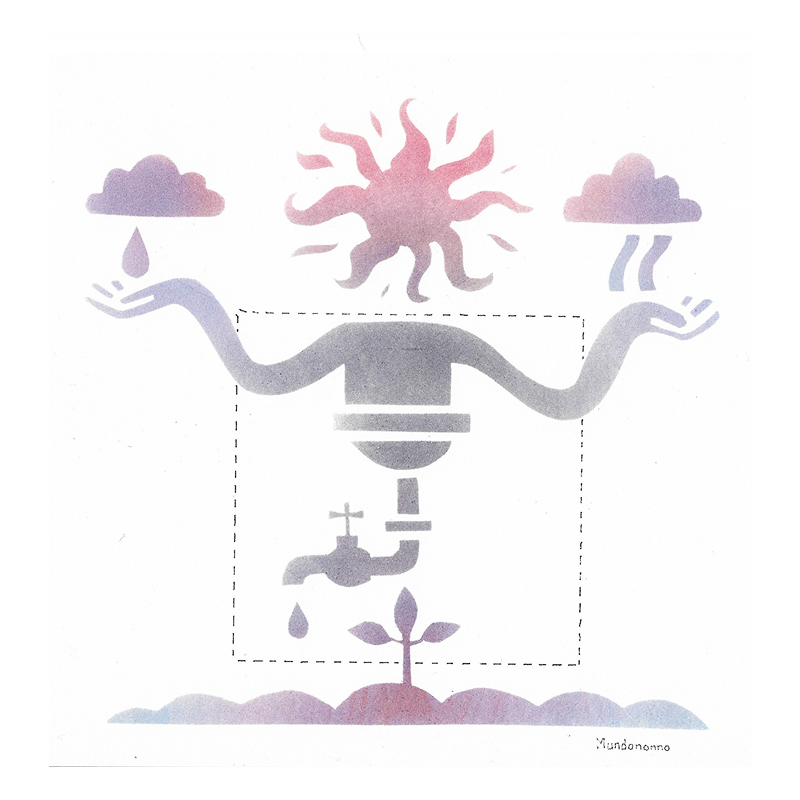
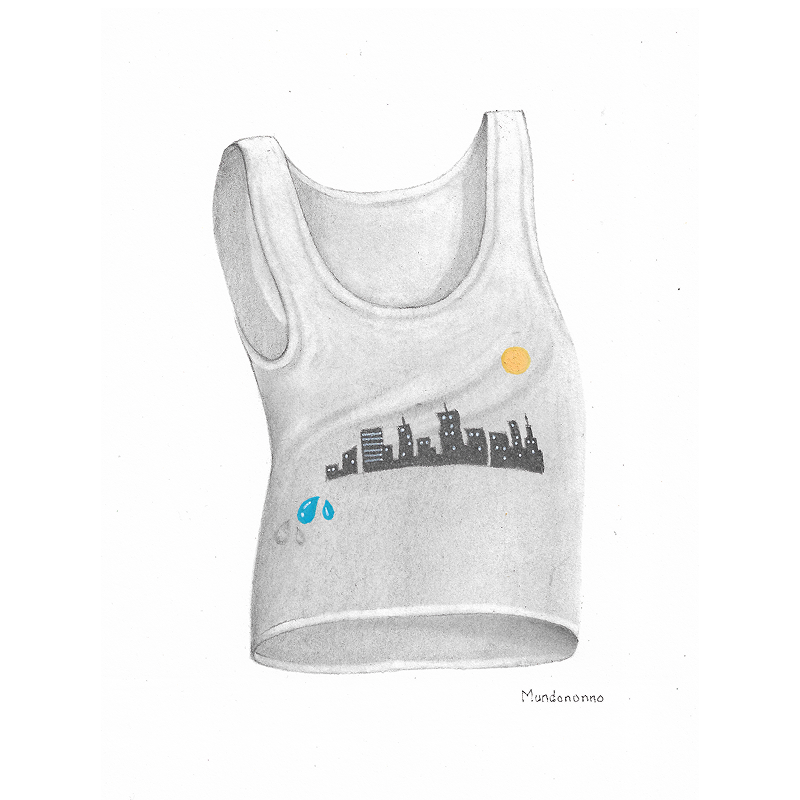
The visual discourse is clearly an exaggerated cry, but one filled with genuine fear about the catastrophes climate change could bring.
An additional layer of pressure is emerging around urban waste and wastewater management systems, particularly in large metropolitan areas where population density and infrastructure demand continue to accelerate simultaneously. Sewage systems were originally designed around relatively stable urban growth patterns and predictable environmental conditions. Today, climate volatility is increasing the operational complexity of these systems through flooding events, water scarcity, infrastructure overload, and contamination risks that directly affect both environmental and public health stability.
Sewage sludge management is becoming increasingly relevant within this context because it sits at the intersection of sanitation infrastructure, resource recovery, emissions management, and circular industrial systems. Large urban wastewater treatment facilities generate massive volumes of sludge that require continuous processing and disposal, while climate-related disruptions place additional pressure on already stressed infrastructure networks. At the same time, sludge contains significant quantities of organic matter, nutrients, and embedded energy that are increasingly being explored as recoverable industrial inputs.
As explored in our article on biological pathways and fermentation systems, biological processing technologies are creating new possibilities for transforming organic waste streams into valuable industrial outputs through controlled microbial and biochemical processes. Similar dynamics are beginning to emerge within urban wastewater systems, where sewage sludge is progressively being reconsidered as a potential feedstock for biogas production, nutrient recovery, biomaterials, and circular resource systems. This transition reflects a broader infrastructure shift where waste management increasingly becomes part of urban resilience and resource optimization strategies.
The relevance of these systems extends beyond sustainability objectives. As cities become more resource-constrained and environmentally exposed, waste and wastewater infrastructure increasingly influence energy resilience, water security, emissions exposure, and operational continuity across urban environments. Technologies capable of integrating recovery, treatment, decentralization, and biological conversion into existing infrastructure systems may become increasingly important as cities adapt to more volatile environmental and resource conditions.
Thermal adaptation systems are emerging as one of the most critical layers within this transition. Rising urban temperatures are creating sustained pressure across buildings, public health systems, and electricity infrastructure, particularly in cities where cooling demand is already approaching grid capacity during peak periods. Technologies such as radiative cooling, advanced thermal materials, passive cooling architecture, intelligent HVAC optimization, and reflective urban surfaces aim to reduce thermal loads while improving energy efficiency and infrastructure resilience. In regions increasingly exposed to prolonged heat events, cooling systems are transitioning from a comfort-related function into a critical component of urban stability.
Water resilience systems are becoming equally important as hydrological volatility increases across many urban regions. Cities are now confronting simultaneous risks of water scarcity, groundwater depletion, flooding, and stormwater overload as historical rainfall and recharge patterns become less reliable. Technologies focused on atmospheric water generation, wastewater reuse, decentralized storage, leak detection, adaptive stormwater management, and smart distribution networks are emerging to increase flexibility and reliability across urban water systems. The broader trend points toward more distributed and adaptive water infrastructure capable of operating under increasingly unstable environmental conditions.
Climate intelligence infrastructure represents another rapidly expanding layer of adaptation. As climate volatility becomes more operationally relevant, urban systems require increasingly precise environmental monitoring and predictive capabilities in order to anticipate disruption before failures occur. Hyperlocal forecasting, catastrophe modeling, urban digital twins, sensor networks, and infrastructure risk analytics are enabling governments, utilities, insurers, and operators to model climate exposure in real time and respond more dynamically to emerging risks. In this context, predictive capacity becomes directly tied to operational resilience, particularly in systems where infrastructure failures can cascade rapidly across interconnected urban networks.
Distributed infrastructure systems are also gaining importance as centralized urban systems become more vulnerable under climate stress. Large-scale infrastructure networks were historically designed around efficiency and centralization, but these structures often create single points of failure during periods of disruption. Microgrids, distributed energy storage, localized cooling systems, decentralized backup infrastructure, and building-integrated resilience technologies are emerging to reduce dependence on centralized systems while increasing operational continuity. The architecture of resilience increasingly favors systems capable of operating independently when broader infrastructure networks become unstable.

Villains and heroes. I believe that a large part of the climate changes and the instability our planet is experiencing has been caused by different industries. Yet, those same industries are also the ones seeking and funding the research needed to find solutions capable of healing our planet.
Flood adaptation infrastructure is evolving through a similar transition. Traditional defensive approaches centered primarily on barriers, drainage expansion, and rigid containment systems are proving increasingly insufficient against more volatile precipitation patterns and rising coastal exposure. In response, cities are beginning to integrate permeable surfaces, floodable public spaces, adaptive coastal infrastructure, wetland restoration, and sponge city principles into broader urban planning strategies. These approaches focus less on resisting environmental stress entirely and more on increasing the capacity of urban systems to absorb, manage, and adapt to disruption dynamically.
Across these categories, a consistent pattern emerges. Urban adaptation technologies are becoming more localized, distributed, sensor-driven, and operationally integrated into the physical systems of cities themselves. Their purpose is to improve environmental performance under ideal conditions, and to maintain system functionality under increasing levels of instability. This reflects a broader transformation in infrastructure logic where resilience, redundancy, and adaptability become increasingly valuable relative to optimization under stable conditions.
The scale of this transition is also reshaping global infrastructure investment priorities. Climate adaptation and resilience are increasingly being recognized as one of the largest emerging infrastructure markets over the coming decades as governments, utilities, insurers, and private operators respond to rising physical climate risks. According to BCG and the World Economic Forum, projected global demand for climate adaptation and resilience investments could reach between $0.5 trillion and $1.3 trillion annually by 2030(1), spanning sectors such as water systems, resilient construction materials, flood protection, urban cooling, climate intelligence infrastructure, and distributed energy systems. McKinsey similarly estimates that climate resilience technologies alone could represent a $1 trillion market opportunity by the end of the decade as environmental volatility accelerates across infrastructure and industrial systems(2).
This expansion reflects a broader shift in how infrastructure risk is being understood. Climate-related disruption is increasingly affecting energy reliability, insurance exposure, logistics continuity, urban operations, water security, and public health simultaneously, creating growing pressure to redesign infrastructure systems around resilience and operational continuity.
For investors, founders, and infrastructure operators, this transition has significant implications. Urban climate adaptation is emerging as a structural market driven by the growing mismatch between historical infrastructure assumptions and current environmental realities. The opportunity extends beyond isolated climate technologies into the redesign of urban operating systems under persistent environmental stress. As climate volatility increasingly shapes infrastructure requirements, insurance exposure, public policy, and capital allocation, adaptation systems are becoming foundational components of the next generation of urban infrastructure.
Cities are entering a period where environmental instability increasingly determines how infrastructure is designed, financed, and operated. The technologies capable of enabling urban systems to maintain functionality under these conditions will likely become central to the future architecture of resilient cities.
AQUACALLI | Rainwater Harvesting
Mexican startup focused on rainwater harvesting systems for homes, buildings, and communities, aiming to reduce dependence on traditional water infrastructure and improve resilience against water scarcity.
TORWASH B.V. – TORWASH
Dutch company developing hydrothermal technology to convert wet organic waste into valuable materials, energy, and reusable resources through sustainable circular processing systems.
WattAir
Startup focused on energy storage and energy management systems for buildings and urban infrastructure, helping reduce electricity consumption, optimize grids, and improve energy resilience.
Entropy Lab Pte Ltd – Pioneering Passive Energy Solutions
Singapore-based company developing passive energy efficiency and thermal control solutions for urban buildings, focused on reducing energy demand and improving climate adaptation.
Calion Technologies
Startup specialized in thermal cooling and efficient temperature management technologies for infrastructure and industrial applications, contributing to energy resilience and urban adaptation.
i2Cool
Hong Kong company developing passive radiative cooling materials capable of reducing temperatures without electricity consumption, designed for buildings and urban infrastructure exposed to extreme heat.
OptiRTC
U.S.-based company using sensors, artificial intelligence, and real-time monitoring to optimize urban drainage and stormwater management systems, reducing flood risks in cities.
ClimateAI
Climate intelligence startup using artificial intelligence and predictive modeling to anticipate environmental risks and support infrastructure, agriculture, and operational resilience planning.
Kilimo
Latin American company focused on water optimization through artificial intelligence and climate data analytics, helping improve water efficiency and resilience against hydrological stress.
umgrauemeio
Brazilian startup developing environmental monitoring and geospatial intelligence platforms using artificial intelligence and satellite data to assess climate risks and territorial exposure.
At Activae, we view urban climate adaptation systems as part of a broader transformation taking place across critical infrastructure and industrial systems. As environmental conditions become increasingly unstable, resilience is emerging as a structural requirement across cities, supply chains, energy networks, and resource systems. Understanding how these transitions reshape infrastructure needs is essential for identifying where technological adoption, industrial transformation, and long-term value creation are likely to accelerate.
We believe the next generation of infrastructure will be defined by efficiency or scale, and the ability to operate reliably under conditions of growing environmental stress. This creates a rapidly expanding landscape of technologies focused on adaptation, operational continuity, and system resilience across multiple sectors.
Urban systems represent only one layer of this broader transition. In the following articles, we will continue exploring other clusters emerging from the same underlying dynamic, including water resilience, thermal adaptation, distributed infrastructure, and climate intelligence systems, examining how these technologies are reshaping the relationship between environmental instability, industrial systems, and capital allocation.
References
(1) Boston Consulting Group (BCG) & World Economic Forum. The Cost of Inaction: A CEO Guide to Navigating Climate Risk. World Economic Forum, 2023. Available at: https://www.weforum.org/publications/the-cost-of-inaction-a-ceo-guide-to-navigating-climate-risk/
(2) McKinsey & Company. Climate Resilience Technologies: An Inflection Point for New Investment. McKinsey Sustainability, 2023. Available at: https://www.mckinsey.com/capabilities/sustainability/our-insights/climate-resilience-technology-an-inflection-point-for-new-investment
Authors

Maria Lozoya
Associate emerging technologies

Diego Santamaria Razo
Managing Director
Related Posts

The interaction between microorganisms, soil, and crops
How microbial technologies support crop nutrition and what determines their…
Water stress in agriculture
Water constraints affect agricultural decisions well before a crop shows…
The resources behind a resilient city
Consider a city preparing for hotter, drier summers. Its water…