
The Future of Mobility Depends on Climate Resilience

Modern transport infrastructure for decades was designed under an assumption that environmental conditions would remain relatively stable over time. Roads, rail systems, drainage networks, and urban transit corridors were built using historical climate patterns to estimate durability, maintenance cycles, and operational risk. That assumption is becoming increasingly difficult to sustain.
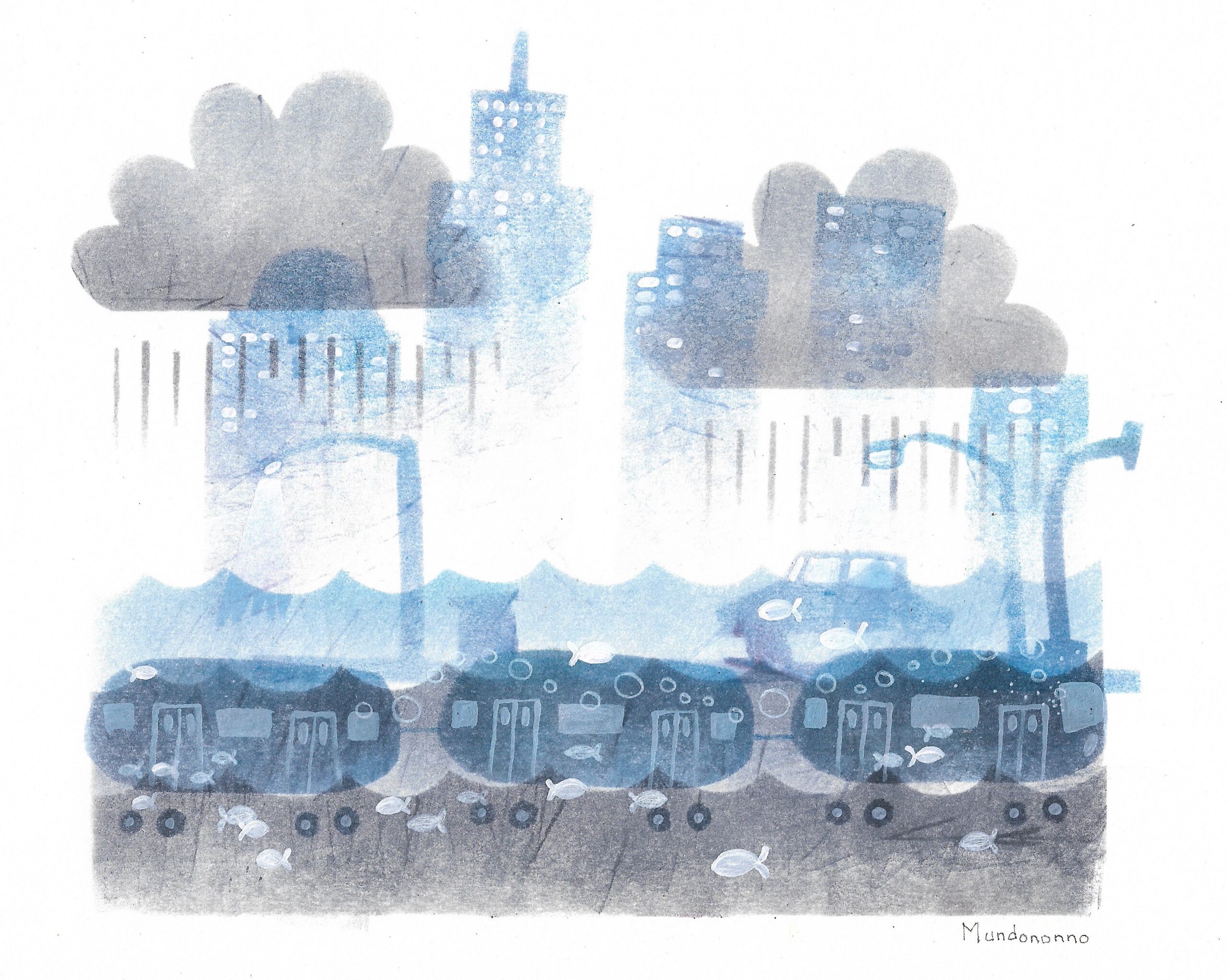
Extreme heat, flooding, drought, and shifting precipitation patterns are exposing vulnerabilities across transport systems worldwide. Rail tracks deform under prolonged heatwaves, underground transit systems become more susceptible to flooding, and road infrastructure experiences accelerated material degradation under changing environmental stress conditions. Rising temperatures affect structural performance and maintenance cycles, while more intense precipitation events overload drainage and underground transit infrastructure. These stressors do not operate independently. Small disruptions in mobility systems can rapidly propagate across logistics, labor access, emergency response, and economic activity, particularly in highly interconnected urban environments.
In previous discussions around systemic infrastructure risk, we explored how climate-related disruptions are not isolated environmental events, but interconnected pressures capable of affecting energy systems, supply chains, industrial operations, and urban functionality simultaneously. Transport infrastructure is increasingly exposed to the same dynamic.
As climate volatility increases, transport infrastructure can’t be evaluated exclusively through efficiency, expansion capacity, or connectivity. Resilience is emerging as a central infrastructure requirement. The ability of systems to continue operating under unstable environmental conditions is becoming just as important as their ability to move people and goods efficiently. This transition is also changing the logic of infrastructure itself, reinforcing the importance of understanding how infrastructure systems can adapt, recover, and remain functional under increasingly unpredictable conditions.
The challenges are the frequency of extreme events and the growing operational uncertainty surrounding infrastructure performance. Systems optimized for stable conditions are being required to function within increasingly variable environmental scenarios, forcing infrastructure resilience to become an operational consideration rather than a long-term adaptation objective.
Mobility does not function independently from energy systems, supply chains, urban development, water management, public health, or economic continuity. A disruption in transport infrastructure rarely remains contained within the transport sector itself.
Delays in logistics affect industrial production, interruptions in transit systems impact labor accessibility, and infrastructure failures during extreme events can rapidly propagate across multiple urban systems simultaneously.
Solving individual points of failure without understanding the broader network of dependencies risks transferring vulnerabilities across the system instead of reducing them.
As environmental volatility increases, the call to action is clear, we need to design systems capable of adapting, recovering, and operating within conditions of continuous uncertainty.
This transition is expanding the role of real-time infrastructure visibility across transport networks. Sensors, predictive maintenance models, environmental monitoring systems, and digital infrastructure simulations are allowing operators to identify stress conditions before failures propagate across the network. The objective is not simply improving maintenance efficiency, but increasing the capacity of systems to respond dynamically under unstable conditions.
At the same time, resilience is also becoming a distributed infrastructure challenge. Mobility continuity increasingly depends on coordination between transportation, energy distribution, communications systems, emergency response, and urban operations. As a result, infrastructure planning can’t remain limited to individual assets or sectors operating independently. The ability of systems to exchange information, adapt operationally, and maintain continuity across interconnected networks becomes increasingly critical under conditions of systemic stress.
The transition toward climate-resilient transport infrastructure will not occur uniformly across regions, cities, or economic systems. The capacity to adapt depends on technological availability and on the condition of existing infrastructure, institutional coordination, investment capacity, and the level of dependency between urban and industrial systems.
Highly interconnected metropolitan regions may possess greater access to advanced monitoring systems, predictive infrastructure management, and adaptive planning capabilities, while rapidly urbanizing areas often face the challenge of expanding infrastructure capacity while simultaneously responding to increasing environmental volatility. In many cases, transport systems are already operating under conditions of congestion, maintenance deficits, and fragmented development, making adaptation significantly more complex.
This creates an uneven transition landscape where infrastructure vulnerability is determined exclusively by the ability of systems to coordinate, finance, maintain, and operationally adapt under increasing pressure.
It is becoming an economic continuity issue. Climate stress affects roads, railways, ports, public transit, and logistics corridors, but the larger cost often appears through delays, maintenance escalation, industrial downtime, and supply chain disruption.
For Europe, the pressure is already visible. A recent EU transport study warns that all modes in the TEN-T network will face significantly more climate extremes by the end of the century, with heatwaves potentially increasing 30-fold and floods, droughts, and wildfires becoming more frequent.[1] The economic signal is also clear: the 2018 Rhine River drought generated around €2.4 billion in losses in Germany, while the 2024 Valencia floods caused damage across road and rail links and broader losses exceeding €16.5 billion.[2]
For the United States, the issue is linked to aging infrastructure and rising maintenance exposure. The U.S. Department of Transportation’s 2024–2027 Climate Adaptation Plan notes that the federal PROTECT program will provide more than $9 billion for climate resilience projects.[3] This signals that resilience is becoming part of mainstream transport investment, not a secondary adaptation measure. Extreme heat already affects runways, roads, rail lines, and power systems connected to transit operations.[4]

Knowing that climate systems themselves have a resilient capacity made me think about the mechanics of this cube puzzle: constantly coming apart and coming back together.
The scale of the transition is also becoming a major financing challenge.According to Boston Consulting Group (BCG), global infrastructure investment needs are projected to reach approximately $94 trillion by 2040, requiring annual investment levels significantly above current spending rates. At the same time, the report highlights that infrastructure assets are expected to operate under far more volatile environmental and economic conditions than those originally anticipated during their design and financing stages[5] and on another report of BCG , resilient infrastructure investment needs are projected to reach approximately $3.7 trillion annually by 2030, while current adaptation financing remains far below that level. The report also estimates that every $1 invested in resilient infrastructure can generate around $4 in avoided losses and economic benefits, highlighting how resilience is increasingly being reframed as a climate adaptation measure and as a long-term infrastructure and economic continuity investment across transport, logistics, energy, and urban systems.[6]
For Latin America and the Caribbean, the challenge is different because adaptation must happen alongside infrastructure expansion, urban growth, and uneven institutional capacity. The IDB’s work on transportation pathways to 2050 frames climate resilience as a central requirement for the region’s transport transition, not as a separate climate agenda. This matters because many cities and logistics corridors in the region already operate under congestion, informality, financing gaps, and exposure to floods, heat, landslides, and coastal risk.[7]
The timing is important. This is not a distant infrastructure agenda for the end of the century. The transition is already appearing in public investment programs, adaptation strategies, insurance pressure, and post-disaster reconstruction costs. By 2100, annual heat-related costs to the European transportation sector alone could reach $12.2 billion, according to World Bank analysis.[8]
An example of this transition already emerging at the urban level is the work developed through the C40 Cities network, a global initiative connecting nearly 100 cities focused on climate resilience, urban sustainability, and infrastructure adaptation. Through programs related to resilient mobility, integrated urban planning, and climate risk reduction, the initiative reflects how transport resilience is increasingly being approached as part of a broader systems challenge involving energy, public health, land use, emergency response, and long-term urban continuity rather than as an isolated transportation issue alone.[9]
The strategic implication is that transport resilience should not be understood as an additional layer of protection added after infrastructure is built. It is becoming a condition for economic continuity, industrial reliability, and long-term urban functionality.
Kilimo (Argentina)
Climate and water intelligence platform using predictive analytics for resource resilience and environmental risk management.
Umgrauemeio (Brazil)
Urban environmental infrastructure and climate adaptation firm focused on resilient public spaces, flood mitigation, and integrated urban systems.
CargoX (Brazil)
Digital freight logistics platform improving freight coordination, route optimization, and operational efficiency across Brazilian transport networks, indirectly contributing to system resilience and logistics adaptability.
Optibus (Israel)
AI-driven public transit optimization platform used globally to improve operational adaptability, routing efficiency, and transit system coordination.
Pavegen (United Kingdom)
Creates kinetic flooring systems that generate energy from pedestrian movement, integrating distributed energy generation into urban mobility infrastructure and public transportation environments.
Solfium (Mexico)
Develops distributed solar energy systems for commercial and industrial operations, contributing to more decentralized and resilient urban and infrastructure energy networks connected to transport and mobility operations.
Hydraloop (Netherlands)
Decentralized greywater recycling for homes and buildings, reducing freshwater demand and improving resilience to water scarcity. (Hydraloop)
Resilience AI (India)
Disaster-risk assessment for buildings and infrastructure, including floods, earthquakes, heatwaves, and landslides. (YourStory.com)
Living Seawalls (Australia)
Modular panels that add habitat complexity to seawalls, pilings, pontoons, and other marine infrastructure; strong “adapt existing infrastructure” logic. (Living Seawalls)
The challenge of climate-resilient transport infrastructure is not limited to protecting mobility systems from environmental disruption, but to understanding how deeply mobility is embedded within the operation of cities, industries, and economic systems. As environmental volatility increases, infrastructure can no longer be planned around isolated efficiencies or sector-specific solutions. The ability of transport systems to remain functional increasingly depends on how well interconnected systems can adapt, coordinate, and respond under changing conditions.
As we have explored throughout previous articles, this transition extends beyond climate adaptation alone and reflects a broader transformation already reshaping infrastructure priorities, investment decisions, and technological development across multiple sectors. This series was developed to expand that conversation and examine how infrastructure systems are beginning to evolve under increasingly dynamic environmental, industrial, and operational conditions.
At Activae, we continue researching and working alongside organizations navigating these transitions, supporting projects and initiatives aligned with long-term resilience, adaptive infrastructure, and systemic operational thinking. At the same time, we aim to help companies and institutions identify where opportunities for transformation still exist, understanding that the complexity of these challenges also opens space for new models, technologies, and forms of coordination capable of supporting more resilient systems in the years ahead.
References
-
European Commission — Investments in climate adaptation should be an integral part of the Trans-European Transport Network, 2024
-
World Bank — Lifelines: The Resilient Infrastructure Opportunity, 2019
-
U.S. Department of Transportation — Climate Adaptation Plan 2024–2027, 2024
-
American Society of Civil Engineers (ASCE) — Rising Heat Is Scorching Americans and Our Infrastructure, 2024
-
Boston Consulting Group (BCG) — Infrastructure Investments in an Uncertain World, 2026
6. Boston Consulting Group (BCG) — Bridging the Funding Gap for Resilient Infrastructure, 2026
7. Inter-American Development Bank (IDB) — Transportation Pathways to Net Zero and Climate Resilience in Latin America and the Caribbean, 2023
8. World Bank — Preparing Resilient Transportation Systems for Heatwaves, 2025
9. C40 Cities. About C40. C40 Cities Climate Leadership Group. Accessed May 28, 2026. https://www.c40.org/about-c40/
Authors

Maria Lozoya
Associate emerging technologies

Diego Santamaria Razo
Managing Director
Related Posts
DeepDiving in functional & advanced materials
Every industrial product begins with a material. Whether designing a…

ClimateTech: Understanding a Growing Ecosystem of Industrial Innovation
ClimateTech has emerged as one of the most dynamic areas…
Building flexible mobility system is a must. Let’s start today.
Climate-resilient transport infrastructure depends on how effectively existing systems can…