Deep Diving into Agriculture and Food System
Feeding the world depends on agricultural systems capable of withstanding climate pressures, distributing value more fairly, and turning scientific innovation into solutions that reach the field.

A system too essential to be overlooked
Every economy depends on reliable access to food, and every food supply depends on a complex network of land, water, energy, labor, infrastructure, knowledge, and capital. Agriculture sustains human life while supporting rural livelihoods, industrial activity, public health, and economic stability, which makes its resilience a strategic concern for societies at every level of development. Even with this central role, the sector frequently receives less technological and financial
attention than industries more visibly associated with innovation, leaving many of its most fundamental challenges unresolved.
This imbalance is especially visible across developing economies, where agriculture supports a significant share of employment and household income while producers continue to face limited access to finance, infrastructure, technology, insurance, and formal markets. The World Bank estimates that approximately 500 million smallholder farmers operate around the world, and although family farms produce most of the global food supply, many remain in poverty and lack the resources required to improve productivity or prepare for increasingly volatile conditions. The financing available for climate adaptation reflects the scale of this disconnect: small-scale farmers receive approximately USD 5.53 billion in climate finance each year, representing only 0.8% of total global climate finance, even though farms smaller than two hectares produce around 35% of the world’s food. World Bank IFAD
The distribution of value across food supply chains creates an additional layer of pressure because higher retail or commodity prices do not necessarily lead to better incomes for producers. Research reviewed by the FAO shows that inadequate transport infrastructure, limited access to market information, weak competition between buyers, and the negotiating power of intermediaries can prevent price increases from reaching smallholder farmers. These conditions reduce their ability to reinvest in equipment, adopt new practices, improve crop quality, or absorb the financial impact of a poor season, reinforcing a cycle in which those responsible for producing food carry a considerable share of the risk while capturing a limited share of the value. FAO Investment Centre
Technology can contribute to higher yields, better resource management, stronger traceability, and greater resilience, although its impact depends heavily on the environment in which producers operate. Land tenure, access to credit, agricultural insurance, rural infrastructure, technical assistance, price transparency, competition policy, and trade rules influence whether an innovation can reach the field and generate sustainable economic returns. Farmer age profiles, familiarity with emerging technologies, and cultural acceptance of non-traditional practices also shape adoption. Policies that recognize producers as essential participants in the food system can create the conditions for technology and investment to strengthen their position, while poorly designed incentives can preserve existing inequalities or place additional costs on those with the fewest resources.
Agriculture and food systems therefore represent an interconnected challenge involving scientific capability, industrial infrastructure, economic incentives, public policy, cultural heritage, and demographics Strengthening them requires coordinated investment across production, processing, storage, logistics, and resource recovery, with careful consideration of how risks and benefits are distributed throughout the value chain. Advances in biology, materials, agricultural practices, genetics, robotics, sensing, artificial intelligence, and engineering are already changing how food can be produced and managed, placing Agriculture and Food Systems firmly within the DeepTech landscape.
Why Agriculture and Food Systems belong to DeepTech
Agriculture and food systems belong to DeepTech because innovation in this sector begins with scientific advances that must function within living and constantly changing environments. A technology developed under controlled conditions can respond differently when exposed to variations in climate, soil, biological activity, or production settings, which makes validation a demanding process. Moving from research to reliable application requires several development cycles
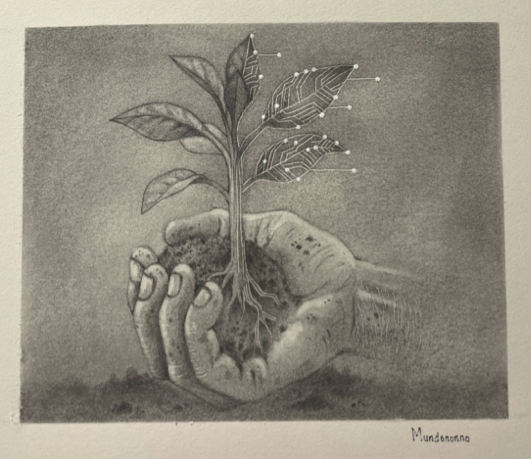
and close collaboration between scientific, engineering, and industry teams.
The same complexity continues during commercial deployment, as these technologies must operate within existing production systems while meeting strict expectations for safety, consistency, affordability, and scale. Their development frequently connects advances in life sciences with physical technologies and computational capabilities, creating solutions whose value depends on their performance under real agricultural or industrial conditions. This scientific intensity, combined with difficult validation and deployment pathways, places Agriculture and Food Systems firmly within the DeepTech landscape.These extended development and adoption cycles delay revenue generation and lengthen the time required for investors to recover their capital, reflecting the long investment payback periods characteristic of DeepTech. European Commission
Understanding the Agriculture and Food Systems landscape
Agriculture represents the productive foundation of the food system, covering the cultivation of crops and the management of livestock, fisheries, and other biological resources. The broader system begins before production, with the resources and knowledge that make farming possible, and continues as food is harvested, transformed, distributed, consumed, and eventually recovered or discarded. The FAO uses this interconnected perspective to describe agrifood systems, recognizing that every stage contributes to how food is produced, delivered, and valued. FAO
Each stage depends on the performance of the others, allowing disruption to travel throughout the system. A change in water availability can affect production volumes, processing capacity, market prices, and consumer access, while inadequate storage can erase the value created during an entire growing season. Agriculture and food systems therefore operate through continuous relationships between natural resources, climate conditions, industrial infrastructure, market conditions, and public institutions.
Within this landscape, value, risk, and decision-making power are distributed unevenly across the chain. Conditions established at one stage influence the performance of the entire system, determining what producers can invest, what processors can source, and what consumers can access. Viewing Agriculture and Food Systems through these relationships helps identify where pressures originate, how they propagate, and where intervention can produce meaningful change.
The interconnected problems the sector must solve
Agricultural production is increasingly exposed to conditions that make reliable output harder to maintain. Climate volatility changes growing seasons and increases the frequency of droughts, floods, and extreme heat, while the degradation of soil and water systems reduces the natural capacity on which production depends. These pressures are intensified by volatile input prices and dependence on fertilizers, energy, and other resources that producers may struggle to access. Over the past three decades, disasters have generated agricultural losses equivalent to approximately 5% of global agricultural GDP each year, showing how quickly environmental disruption can become an economic and food security problem. FAO
Pressure continues after food leaves the farm because limited storage, preservation, and transportation capacity can destroy part of the value created during production. Around 13.2% of food is lost between harvest and retail, followed by a further 19% wasted across
retail, food service, and households. The resources used to produce this food are lost with it, while producers, businesses, and consumers absorb the economic consequences. FAO
Food availability and food access can also move in different directions. Around 673 million people experienced hunger in 2024, and 2.6 billion could not afford a healthy diet, with affordability deteriorating across several low-income economies. At the same time, producers can receive prices that leave little capacity to reinvest or prepare for future disruption. This creates a system in which food can become increasingly expensive for consumers while remaining economically precarious for many of the people who produce it. FAO, IFAD, UNICEF, WFP, and WHO
BCG describes agrifood supply chains as increasingly exposed to overlapping climate and geopolitical disruptions that can spread from agricultural production through trade and distribution, constraining availability and intensifying price volatility. Its modeling with Quantis estimates that production across 15 crops representing 70% of global caloric intake could decline by an average of 12% by 2050, with losses reaching 35% for some crops. BCG
These pressures reinforce one another across the system. Lower productivity can raise prices, inadequate infrastructure can increase losses, weak producer economics can delay investment, and environmental decline can make each future production cycle more difficult.
Recent events illustrate how these pressures materialize across different regions. Repeated heatwaves across much of Europe in June and July 2026 shortened crop development cycles, depleted soil moisture, and led to downward revisions of 1–4% for winter crop yields and 6–7% for grain maize and sunflowers. Elsewhere, the 2020 desert locust crisis threatened harvests and pasture across East Africa, and the 2017 Atlantic hurricane season generated extensive crop and livestock losses in the Caribbean. Although these events differ in origin, each can reduce production, destabilize rural livelihoods, and transmit disruption throughout food supply chains. European Commission Joint Research Centre FAO
Addressing the sector’s challenges therefore requires solutions capable of improving resilience and resource efficiency while preserving value throughout the chain and making nutritious food more accessible.

Market landscape: where value is being created
The economic scale of Agriculture and Food Systems extends across several industries, which makes a single market-size estimate insufficient to describe the entire landscape. Primary agriculture alone generated approximately USD 4 trillion in global value added in 2023, according to FAO data, while the broader system creates additional value through inputs, processing, storage, transportation, distribution, and retail. Food demand is expected to increase by around 30% by 2050, placing further pressure on the infrastructure and productive capacity that support this activity. FAO World Bank
This scale creates opportunities for technologies that improve biological performance and resource efficiency while helping production systems prepare for, withstand, and recover from floods, wildfires, droughts, and extreme winds. The opportunity continues beyond the farm through solutions that protect food after harvest and strengthen coordination across supply chains. Value can emerge during production through more stable yields, during processing through efficiency and product development, or further downstream through preservation, traceability, and waste recovery. The commercial potential of each solution depends on the problem it addresses, the portion of the value chain it serves, and the capacity of producers or industrial buyers to adopt it.
The size of the investment requirement reveals how much of this opportunity remains unresolved. FAO estimates that transforming agrifood systems in low- and middle-income countries will require at least USD 4 trillion through 2030, equivalent to approximately USD 680 billion per year. This capital must support physical infrastructure, scientific development, productive capacity, and enabling conditions that allow innovation to reach the regions where demand and vulnerability are greatest. For investors and technology developers, the market opportunity therefore lies in solving specific operational constraints within a system whose continued growth and resilience have become global economic priorities. FAO Investment Centre
The scale of this opportunity is matched by a considerable financing and adoption gap. The report cites a UN estimate that the sustainable agrifood transition will require USD 1.3 trillion annually, while public funding remains insufficient and private capital continues to play a limited role. More than three-quarters of the 1,000 US farmers surveyed expressed a positive view of climate-smart agriculture, yet cover crops were used on less than 5% of US cropland in 2022. Closing this gap will depend partly on practical and scalable measurement, monitoring, reporting, and verification systems that can demonstrate outcomes, reduce uncertainty, and connect improved farm performance with compensation and investment. This creates a further market for enabling infrastructure capable of turning climate-smart practices into credible and financeable opportunities. Food Systems for the Future and BCG
The technologies reshaping Agriculture and Food Systems
Scientific and technological development is creating new points of intervention throughout the agrifood system, from the biological foundations of production to the recovery of resources after consumption. The following families provide a concise view of the main approaches and the problems they are designed to address. FAO Agrifood Systems Technologies and Innovations Outlook

These categories provide a useful way to organize the technology landscape, although companies rarely operate within a single boundary. The startups below show how ventures around the world are combining these approaches to address specific challenges across agricultural production, resource management, processing, preservation, and distribution.
Agricultural biotechnology and biological inputs
Puna Bio
(Tucumán, Argentina)
Develops microbial seed treatments from extremophile bacteria to improve crop nutrition, stress tolerance, yields, and soil health.
Tropic
(Norwich, United Kingdom)
Uses CRISPR and proprietary gene-editing tools to develop disease-resistant, climate-resilient, and longer-lasting tropical crops, including bananas and rice.
BioPrime AgriSolutions
(Pune, India)
Develops nature-derived biostimulants, biofertilizers, and biological crop protection products that improve nutrient efficiency and tolerance to environmental stress.
Precision agriculture and intelligence
Aerobotics
(Cape Town, South Africa)
Uses AI, smartphone images, and drone data to measure fruit quality, forecast yields, and monitor orchard performance.
Taranis
(Tel Aviv, Israel)
Combines high-resolution drone imagery and AI to identify weeds, diseases, insect damage, nutrient deficiencies, and variations in field health.
SatSure
(Bengaluru, India)
Transforms satellite and geospatial data into intelligence for crop monitoring, yield estimation, procurement planning, insurance, and agricultural risk assessment.
Robotics and automation
FarmDroid
(Vejen, Denmark)
Produces solar-powered autonomous field robots that seed crops, control weeds mechanically, and support precision spraying.
Niqo Robotics
(Bengaluru, India)
Develops AI-powered agricultural robots and camera systems for automated weeding, thinning, and plant-level spot spraying.
Burro
(Philadelphia, United States)
Builds electric autonomous robots for harvest assistance, crop transport, mowing, and spraying in vineyards, orchards, nurseries, and berry farms.
Controlled production and water technologies
Kilimo
(Córdoba, Argentina)
Combines satellite data, hydrological models, and field implementation to improve irrigation efficiency and generate measurable water savings.
Kheyti
(Hyderabad, India)
Provides affordable modular greenhouses and agronomic support that help smallholders protect crops from heat, storms, pests, and water scarcity.
Iyris
(Thuwal, Saudi Arabia)
Develops greenhouse materials that filter infrared heat while preserving plant-active light, reducing cooling, energy, and irrigation requirements.
Food biotechnology and new production platforms
Solar Foods
(Vantaa, Finland)
Produces Solein protein by growing microorganisms with air, electricity, and fermentation, reducing dependence on agricultural land and weather.
TurtleTree
(Singapore)
Uses precision fermentation to produce animal-free lactoferrin for functional foods, beverages, supplements, and advanced nutrition products.
Newform Foods
(Cape Town, South Africa)
Develops scalable biomanufacturing processes, cell lines, and production systems for cultivated and cell-based food products.
Processing, preservation, and food safety
Fresh Inset
(Toruń, Poland)
Develops packaging stickers and pads that gradually release 1-MCP, slowing produce ripening and extending post-harvest shelf life.
Lumachain
(Sydney, Australia)
Uses computer vision, AI, and supply-chain data to improve processing visibility, product traceability, quality control, and recall readiness.
Sufresca
(Ness Ziona, Israel)
Produces natural edible coatings that slow softening, moisture loss, and fungal decay in fresh fruits and vegetables.
Circular food systems
PeelPioneers
(Den Bosch, Netherlands)
Processes citrus peels into food-grade fibers, essential oils, flavor ingredients, and materials for cosmetics and cleaning products.
Chanzi
(Arusha, Tanzania)
Uses black soldier fly larvae to convert food waste into protein for animal feed and organic fertilizer.
Insectta
(Singapore)
Valorizes black soldier fly by-products into high-value biomaterials, including chitosan and melanin, while recovering proteins and minerals.
Supply-chain logistics, cold-chain, and energy-efficiency technologies
NanoFreeze
(Bogotá, Colombia)
Develops bio-nanotechnology-based cooling materials, including cold sheets, portable coolers, and refrigerator panels that maintain temperature while reducing refrigeration energy demand.
SokoFresh
(Nairobi, Kenya)
Deploys rentable, solar-powered mobile cold rooms near farms and combines cold storage with market access and produce-distribution support.
Celcius Logistics
(Navi Mumbai, India)
Operates a technology-enabled cold-chain network connecting refrigerated transportation, warehouses, and distribution through integrated logistics and inventory-management systems.

Technology maturity and 2030 market opportunity (References at the end of the article)
The boundaries between these families remain permeable because many solutions combine biological, physical, and computational capabilities. A microbial platform can improve soil performance, support new ingredients, or convert residues into useful materials, while sensing technologies can strengthen decisions during production, processing, and distribution. Their combined value comes from improving how resources and information move across the system, allowing food to be produced more reliably and preserving a greater share of its value throughout the chain.
From technical performance to system adoption
Scientific work represents the beginning of what one day will be a commercial success in Agriculture and Food Systems. Technologies developed under controlled conditions must continue to perform across changing soils, climates, crops, and production environments, which can require several growing seasons and multiple rounds of validation. This exposure to biological variability increases development time and allow developers to create evidence from field testing, an essential condition for producers, industrial partners, and investors.
Adoption then depends on whether the technology fits the economic and operational realities of its users and the adoption acceptance of it, as cultural heritage in agriculture plays an important barrier to scale. Producers and food companies need measurable improvements that justify the cost of implementation, while compatibility with existing equipment, infrastructure, and production cycles influences how easily a solution can be integrated. Access to financing also shapes adoption because many users cannot absorb high upfront costs or wait several seasons for returns, even when the long-term value is clear.
Scaling becomes more demanding when food safety requirements, regulatory approvals, manufacturing capacity, distribution agreements, and consumer acceptance enter the process. EIT Food describes the transition between technical validation and commercial production as a persistent scaling gap, particularly for innovations that require pilot facilities and industrial infrastructure. Progress therefore depends on coordination among developers, producers, regulators, manufacturers, investors, and buyers, allowing scientific advances to become solutions that can operate reliably and create value across the food system. EIT Food
Building resilience across food systems
Agriculture and Food Systems should be treated as strategic infrastructure because their performance influences public health, economic stability, environmental resilience, and the continuity of everyday life. Scientific advances can strengthen production and preserve more value across the chain, while supportive policies, accessible finance, reliable infrastructure, and fairer market conditions determine who can adopt those advances and benefit from them. Lasting transformation will depend on aligning these elements around systems that can remain productive under pressure and sustain the people responsible for their operation.
For investors, founders, and industrial organizations, the opportunity lies in understanding where technology can address a meaningful constraint and how its impact will propagate across the wider system. This requires evaluating venture readiness (as our assessment) within the realities of production, regulation, adoption, and regional context, while considering how value and risk will be distributed among participants.
At Activae, we approach Agriculture and Food Systems through the relationships between technology, customer & market, manufacturing, supply chain, regulatory & policy, team & organization, and financial. By examining these connections, we help identify where innovation can generate measurable value, what conditions are required for deployment, and which opportunities can contribute to a more resilient, productive, and equitable food system.
References
-
Agricultural biotechnology — USD 212.57B: Grand View Research
-
Precision farming — USD 24.09B: Grand View Research
-
Agricultural robots — USD 48.06B: Grand View Research
-
Controlled-environment agriculture — USD 199.9B: Lucintel
-
Alternative proteins — USD 194.1B: Lucintel
-
Food-processing machinery and equipment — USD 102.8B: Research and Markets
-
Food-waste management — USD 106.7B: Grand View Research release
Authors

Maria Lozoya
Associate emerging technologies

Diego Santamaria Razo
Managing Director
Related Posts
Deep Diving into Transport, Logistics, and Cold Chain
A temperature-controlled product is only as protected as the weakest…
Deep Diving into Industrial Processes and Manufacturing
How clean heat, electrification, hydrogen, alternative chemistries, and carbon management…

How does Activae prepare you for Investment?
Science-based ventures carry several forms of progress at once: technical…