Science and Technology for Society Forum
In an era defined by rapid technological change, international collaboration and innovation have become essential drivers of sustainable development.
The Mexican Ministry of Economy, led by Dr. Marcelo Ebrard, together with key national institutions such as the Mexican Institute of Industrial Property (IMPI), directed by Santiago Nieto, has brought to Mexico—over several years—the distinguished STS Science and Technology Forum. The 2024 edition took place in Cuernavaca, a city recognized as one of Mexico’s leading innovation hubs, home to more than 40 research and innovation centers and over 2,500 researchers dedicated to advancing science and technology in the country.
This edition of the forum welcomed representatives from 38 countries, reinforcing its global relevance. One of the core goals of the STS Forum is to maintain a spirit of hope and foster respectful dialogue, creating a space where diverse nations can collaborate to address the challenges and opportunities brought by scientific and technological progress.
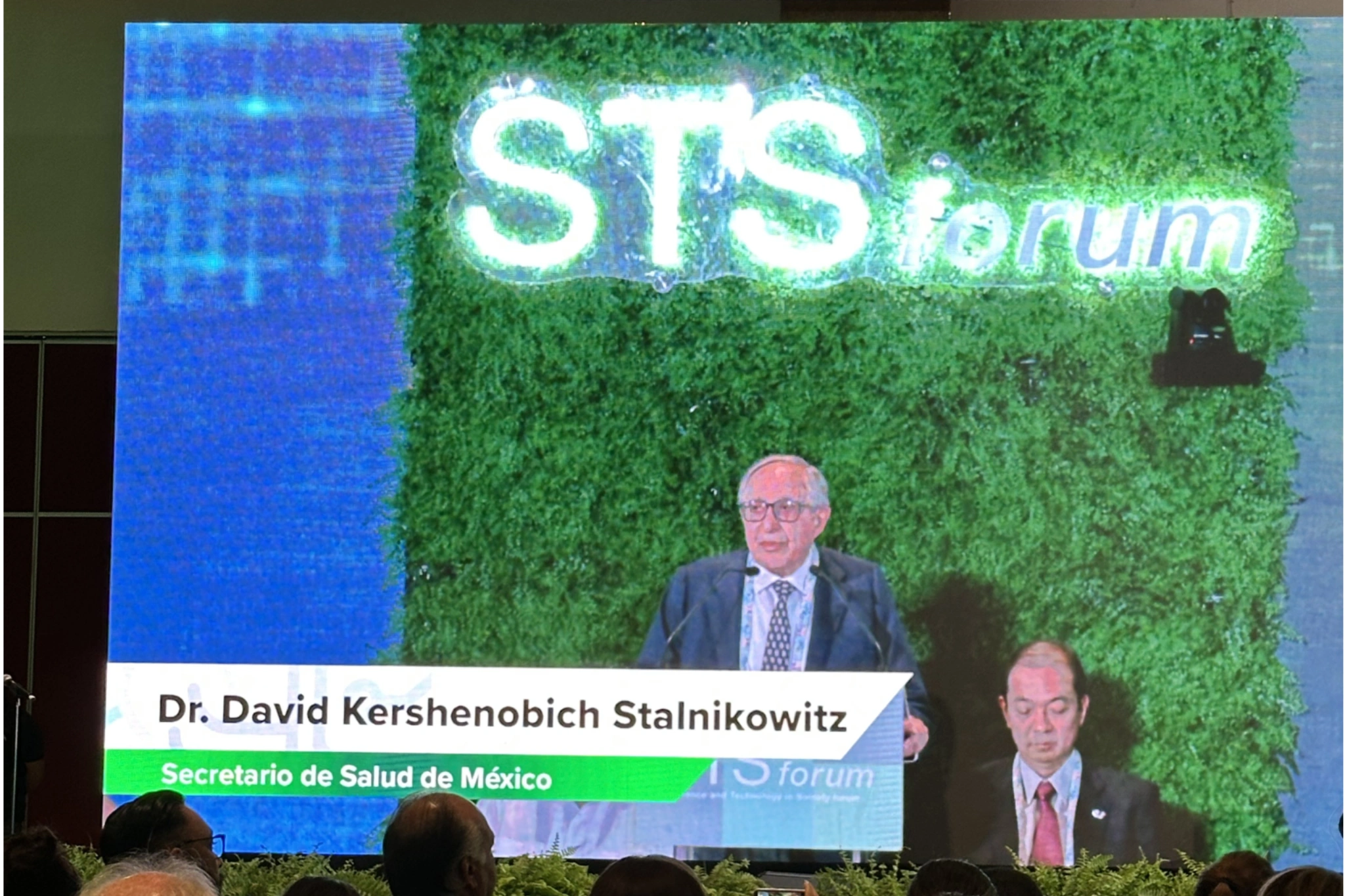
The event also featured the participation of prominent figures such as Raquel Serur Smeke, Mexico’s Undersecretary for Latin America and the Caribbean at the Ministry of Foreign Affairs; Dr. David Kershenobich, Mexico’s Secretary of Health; Rosaura Ruiz Gutiérrez, Secretary of Science, Humanities, Technology, and Innovation (SECIHTI), and Ryosei Akazawa, Japan’s Minister for Foreign Affairs, who contributed to the forum through a keynote. During the discussions, experts explored critical global topics including AI, sustainable development, and water management.
Originating in Japan in 2004, the STS Forum (Science and Technology in Society Forum) was established as an international platform to promote collaboration among scientists, policymakers, industry leaders, and innovators. Its mission is to explore how science and technology can solve humanity’s most pressing problems and to reflect on the ethical and societal implications of innovation. The forum’s expansion into Latin America, specifically through its presence in Mexico demonstrates Japan’s strong commitment to international cooperation and sustainable technological development.
Technology, Sustainability, and International Cooperation
Although the topics addressed during the forum (health, AI, sustainable development, and water management) appear different from one another, they share a crucial common thread: the application of technology for long-term sustainability.
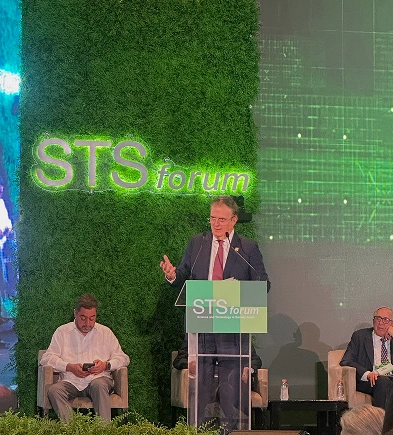
Marcelo Ebrard opening the event.
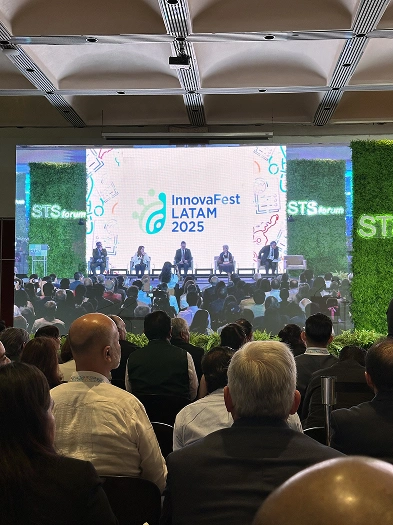
Opening panel discussion of the forum. From left to right: Rosaura Ruiz, Marcelo Ebrard, Margarita González, Ryosei Akazawa
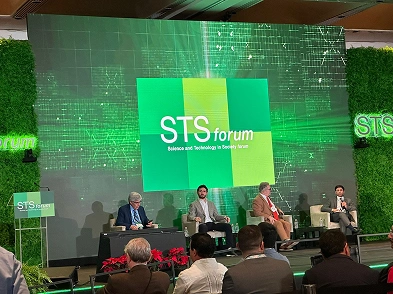
Second Day of the STS Forum: Active Minds. From left to right: Luis Guitierrez, Marcelo Ebrard, Diego Santamaría, and Edgar Valdés.

Red Global Mx. From left to right: Ing. Luis Gutiérrez Reyes, Director-General of the Institute of Mexicans Abroad (IME), Patricia Valdespino, President of the Mexican Association of Antarctic Studies and Diego Santamaria, Managing Director of Activae
These themes underscore the growing importance of international cooperation. No single nation can fully address the multidimensional challenges of 21st-century innovation alone. Coordinated efforts make it possible to advance cleaner technologies, protect natural
resources, improve public health systems, and strengthen space research.
Following the thematic presentations, the IMPI held a special ceremony promoting technological innovation in multiple categories. Awards recognized outstanding projects created by women innovators, young people under 25, and contributors across diverse scientific, musical, and technological fields.
“Mexico is, for the first time, a member of the International Antarctic Science System, and four Mexican scientists are reaching the polar circle thanks to the generous support of Ukraine.”
-Patricia Valdespino.
Among other activities Activae’s participation was in a panel titled “From Startups to Unicorns,” where Diego Santamaria represented the Fellows Program of Breakthrough Energy joining Marlene Garayzar, co-founder of Stori, and Daniel Vogel, founder and CEO of Bitso. The conversation highlighted several key insights, including:
- the importance of building scalable business models in emerging markets,
- strategies for navigating regulatory environments as startups expand,
- the core indicators investors evaluate when identifying potential unicorns, and
- the essential role of innovation ecosystems in accelerating the growth of high-impact ventures.
- the relevance of philanthropic programs supporting early-stage startups at the beginning of their journey, like the Breakthrough Energy Fellows program.
How to Identify a Successful Project or Startup: Key Criteria for Innovation
In a world overflowing with new ideas, choosing which projects deserve time, resources, and long-term commitment can be challenging. Whether we’re talking about early-stage initiatives or full-fledged startups, certain criteria consistently distinguish high-potential ideas from those that struggle to survive. Understanding these elements increases the likelihood of success and provides a strategic lens for innovators and entrepreneurs.
1. Uniqueness: An Original Concept
Successful projects often begin with a unique idea—one that stands out from existing solutions. Originality can mean reframing an existing problem in a novel way or introducing an entirely new approach. What matters is differentiation in a competitive landscape.
2. Growth Potential
A strong project shows clear opportunities for expansion: a growing market, increasing user adoption, or adaptability to new needs. Without growth potential, even solid ideas can quickly stagnate.
3. Scalability
The solution must have the ability to expand efficiently without requiring disproportionate resources. Scalable projects can sustain operations as they grow, maintaining performance and quality over the long term. It also implies that the solution can be applied across multiple geographies, ideally on a global scale.
Solving a Real Problem in an Existing Market
The most successful projects address genuine, unmet, and validated market or industrial needs. Solutions without real demand rarely gain traction. A clear value proposition encourages adoption and lays a strong foundation for sustainable growth.
What Defines a Successful Startup?
Startups that succeed meet the criteria above and demonstrate competitive solutions that perform well in real-world conditions. Startups and scale-ups looking to validate their solution require consolidated partners. They know their market needs, language, and represent a market entry for new developments. Collaboration is the key.
“To be an entrepreneur, you have to enjoy solving problems.”
“Para emprender te debe gustar resolver problemas”
-Marlene Garayzar.
Learning From Innovation Challenges
Daniel Vogel, from Biso suggested that a valuable resource for entrepreneurs is the book “The Innovator’s Dilemma”, which explores why even established companies can fail to innovate and how new ventures can navigate disruptive environments. It highlights the structural and strategic barriers innovators face when transforming ideas into successful businesses.
From project selection to startup growth, the core principles remain: originality, real-world relevance, growth potential, scalability, and strong performance metrics. When these align—and when innovation is supported by collaborative ecosystems and international cooperation—ideas can evolve into transformative solutions.
During the forum, two side events took place: InnovaFest LATAM 2025 and Mentes en Acción. Throughout these sessions, the government clearly communicated that, through Plan México, the country will tend to support the implementation of innovative solutions by acting as a first adopter. This is a critical role governments can play in accelerating the growth of emerging technologies and in shaping forward-looking public policies. Even with the right technology in place, the execution of effective policies remains essential, as it ultimately determines the real impact of scientific and technological advances. Spaces like these demonstrate how interdisciplinary collaboration can generate powerful change, guiding innovation in the right direction.
The event was a resounding success, and we look forward to participating in future editions. Activae reaffirms its role as an active ambassador of international cooperation, committed to fostering dialogue across borders and disciplines. Beyond innovation, we remain focused on generating measurable impact by connecting science, policy, and global markets, supporting the responsible adoption of technologies that contribute to a sustainable future. An illustrative list of the startups that participated in Innovafest is provided on the following page.
Innovafest LATAM
Some examples of startups that participated during the forum are presented below. These initiatives stand out for their innovative approaches and impact potential, and represent only a small selection of the many startups that took part in the event.

Montecaldera
Provides a cloud-based scientific platform designed to support research and development teams working with complex systems and advanced materials. Its technology helps organizations accelerate innovation by modeling, analyzing, and optimizing materials and processes across industries
To learn more: laproteina.mx

Nanofreeze
Nanotechnology for sustainable refrigeration, using a patented, biodegradable coolant that can reduce energy consumption in refrigeration systems by up to 50%, especially when paired with a smart measurement and maintain cold temperatures for long periods without electricity, making it ideal for cold chain logistics in areas with limited energy access.
To learn more: nanofreeze.com

MicroIN
Our platform enables the design of customized encapsulation protocols for microorganisms by selecting appropriate biomaterials and technical parameters to form microcapsules that preserve viability and effectiveness. The technology supports multiple applications, with a particular focus on the agro-environmental sector.
To learn more: microinbio.com

La Proteina Mx
We are a Mexican biotechnology company that develops, produces, and commercializes high-quality molecular biology reagents, including thermostable polymerases, molecular weight markers, and other key enzymes for scientific research.
To learn more: laproteina.mx

Greenfluidics
We combine biotech & architecture to empower developers, brands, and designers to create high-performance spaces that generate energy, control thermal loads, and become marketing icons in the urban landscape.
To learn more: nanofreeze.com.co

WAS Co
sustainable materials that reduce costs, increase efficiency, and minimize the environmental impact of every project.
To learn more: wascompany.com
Authors

Maria Lozoya
Associate emerging technologies

Diego Santamaria Razo
Managing Director
Related Posts

Advanced Materials and Critical Minerals: The Supply Chains Powering the Energy Transition
Following the narrative developed throughout this energy series, we established…
From Technology Race to System Coordination: How Energy Innovation Organizes Around Clusters
For years, the energy transition was framed as a technological…

From a global challenge to local bottlenecks
As global energy demand continues to rise, energy infrastructure is…