
Biological pathways: Fungal Decomposition
Fungal decomposition illustrates how nature’s most refined biological system can inspire low-impact, circular solutions — transforming organic residues into energy, soil health, and long-term carbon stability.
Cities today are growing faster than the infrastructure built to support them. Every day, vast amounts of resources end up as waste, traveling long distances to centralized facilities. This linear model — take, use, dispose — is reaching its limits: logistics costs are rising, environmental regulations are tightening, and climate impact is now a direct factor in business competitiveness[1].
Organic waste is one of the biggest challenges. It represents 30–50% of municipal solid waste, is costly to collect and transport, and generates significant methane emissions in landfills[1]. At the same time, regulations such as the EU’s mandatory bio-waste separation (2024) are accelerating the shift toward circular solutions[2].
For forward-thinking companies, this is more than a compliance issue – it is a strategic opportunity to create value from innovation, reduce risk, and build resilience. Emerging biological, nature-inspired and tech-driven solutions are proving that organic waste can be upcycled into energy, fertilizers, proteins and biomaterials[3].
At Activae, we group these solutions into three complementary pathways:
- Biological (e.g. composting, fermentation): low CAPEX, emission reduction, nutrient recovery.
- Nature-Inspired (e.g. insect larvae, microbial bioconversion): protein and biomaterial production.
- Tech-Driven (e.g. thermochemical, electrochemical): high-value outputs for industrial use.
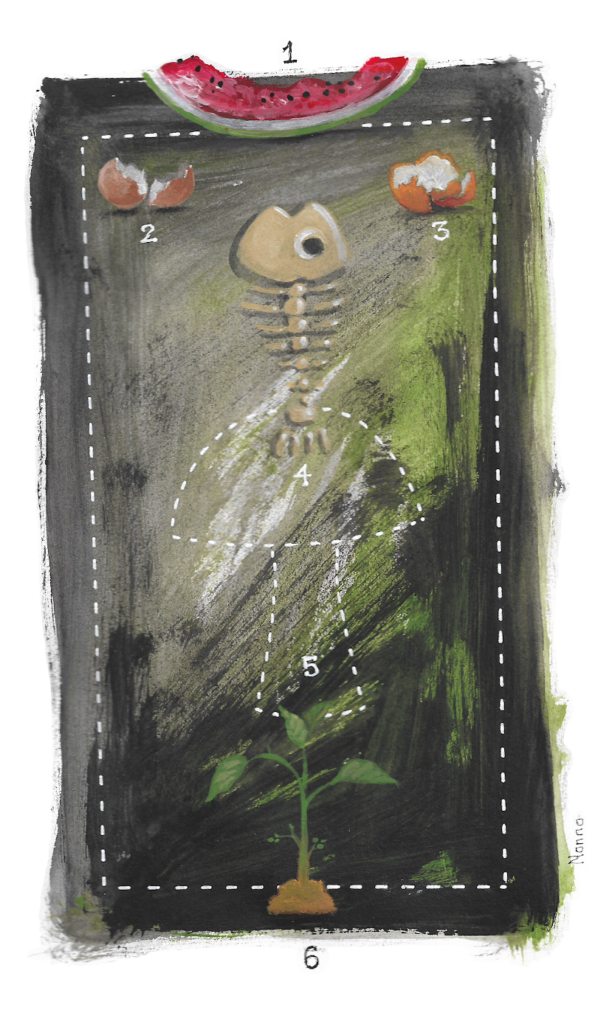
Illustration of the organic matter cycle — From food residues (1–3) to biological decomposition (4) and nutrient regeneration that enables new plant growth (5–6). A visual metaphor of how waste returns to life through natural circular processes.
Their modularity and decentralization make them especially relevant for business: they reduce costs, lower regulatory risks, and open new revenue streams. Real transformation comes from strategically combining these technologies to address different waste types and business goals — moving from passive waste management to local value creation and competitive advantage[4].
Within this landscape, fungal decomposition stands out because its market potential extends far beyond waste treatment — positioning it within the fast-growing bio-based materials and carbon management sectors highlighted in our recent LinkedIn analysis on circular market size. As one of nature’s most sophisticated and undervalued biologicalsystems. Its capacity to break down complex organic matter, recycle nutrients, and stabilize carbon positions fungi at the heart of ecosystem resilience and climate regulation. As global industries seek scalable, low-impact ways to restore soils, manage carbon, and close nutrient loops, understanding and leveraging fungal processes offers both ecological and economic opportunity. The following sections explore fungal decomposition in depth — its technical foundations, applications, business potential, and the role it can play in building more resilient, profitable, and sustainable value chains.
Symbolic illustration of fungi as “nature’s engineers” — transforming waste into value through biological intelligence and circular innovation.
Soils represent the largest carbon reservoir on land, storing more than three times the carbon found in the atmosphere or vegetation [5]. The stability of soil organic matter (SOM) depends on a dynamic balance between microbial decomposition and physicochemical protection mechanisms. Organic residues become stabilized when bound to mineral particles or incorporated into aggregates, reducing microbial accessibility [6].
Within this global system, fungi play a central role as biological drivers of carbon turnover. Their enzymatic capacity to degrade complex polymers such as cellulose and lignin determines how rapidly organic matter is recycled or locked into long-term storage [7].
Fungi are uniquely adapted to decompose organic material in diverse, often extreme environments. On forest floors and river sediments, they colonize plant debris and secrete enzymes that fragment polysaccharides and lignin into smaller, bioavailable molecules.
Recent research links cellulose decomposition rates directly to the abundance of fungal communities and the expression of specific cellulose-degrading genes such as cellobiohydrolase I (cbhI) [8]. These functional genes can act as molecular indicators of ecosystem processes, offering a predictive view of carbon cycling under changing climate conditions [9].
Through decomposition, fungi release essential nutrients—nitrogen, phosphorus, and trace elements—that would otherwise remain bound in organic matter. This biochemical recycling maintains soil fertility and sustains primary productivity across ecosystems [10].
By regulating how organic matter transitions from biomass to stable SOM, fungal activity directly influences both short-term nutrient availability and long-term carbon sequestration. In this sense, fungal decomposition operates as a natural form of “biological carbon engineering,” balancing ecosystem productivity with climate stability [11].
Understanding fungal decomposition is increasingly relevant for land management, carbon accounting, and nature-based climate solutions. Integrating fungal dynamics into soil and ecosystem models enables more accurate projections of carbon persistence and nutrient fluxes. For businesses and policymakers, this knowledge informs regenerative agriculture, carbon-credit methodologies, and circular bioeconomy strategies—transforming decomposition from a background process into a measurable climate asset.
| Fungus | Key enzyme profile / mechanism | Selectivity | Strengths | Challenges |
|---|---|---|---|---|
| Phanerochaete chrysosporium | Produces LiP, MnP, laccase | Less selective; tends to degrade lignin and also attack cellulose/hemicellulose if conditions permit. | Transformación controlada de valor ecológicoGood at degrading many woody and non-woody lignocellulosic substrates; often used as benchmark in white-rot studies. | Risk of overdegradation of sugars, slower kinetics, need careful control of culture conditions. |
| Trametes versicolor | Primarily secretes laccase and MnP; sometimes versatile peroxidases; less emphasis on LiP. | Moderate selectivity; many studies show simultaneous degradation (lignin + polysaccharide). | Widely used in wood decay, bioremediation, textile dye degradation; good at degrading hardwoods. | Balanced delignification and carbohydrate exposure; good for pretreatment where some sugar loss is acceptable. |
| Pleurotus ostreatus | Produces laccase, MnP, and some auxiliary oxidative enzymes; less strong LiP activity compared to P. chrysosporium. | Can show relatively selective lignin removal under some conditions (especially in agricultural residues). | Good with non-woody residues (e.g. straw), agricultural wastes; also easier to grow in many settings. | Lower robustness on hard woody biomass; slower kinetics; may require longer incubation. |
| Ceriporiopsis subvermispora | Emphasis on MnP (and possibly lower LiP), modest cellulase expression. | More selective for lignin removal (i.e. minimal cellulose loss) — often used for “selective white rot” pretreatment. | More limited in range of substrates but favorable where preserving carbohydrate is critical. | Slower overall rates; lower robustness under varying conditions. |
| Irpex lacteus | Known to produce ligninolytic enzymes effective in paddy straw, etc. (used in pilot studies) | Moderate | Has been used in pilot-scale paddy straw pretreatment. | Might have lower rates, require optimization, adaptation to substrate. |
Overall, the comparative strengths of each fungus highlight both the potential and the practical limits that define this emerging field.
- Regulatory and biosafety ambiguity — especially for non-model or genetically modified fungi — can delay or block deployment.
- Scale-up technical risk: morphological complexity, mass transfer, contamination, substrate variability.
- Funding & capital intensity: biotech scale-up demands more capital and patience than many investors tolerate.
- IP / access to strains and licensing constraints.
- Geographic mismatches between substrate sources, markets, regulatory regimes.
- Adoption inertia in downstream industries, requiring strong evidence, pilot demonstration, and low-risk modes.
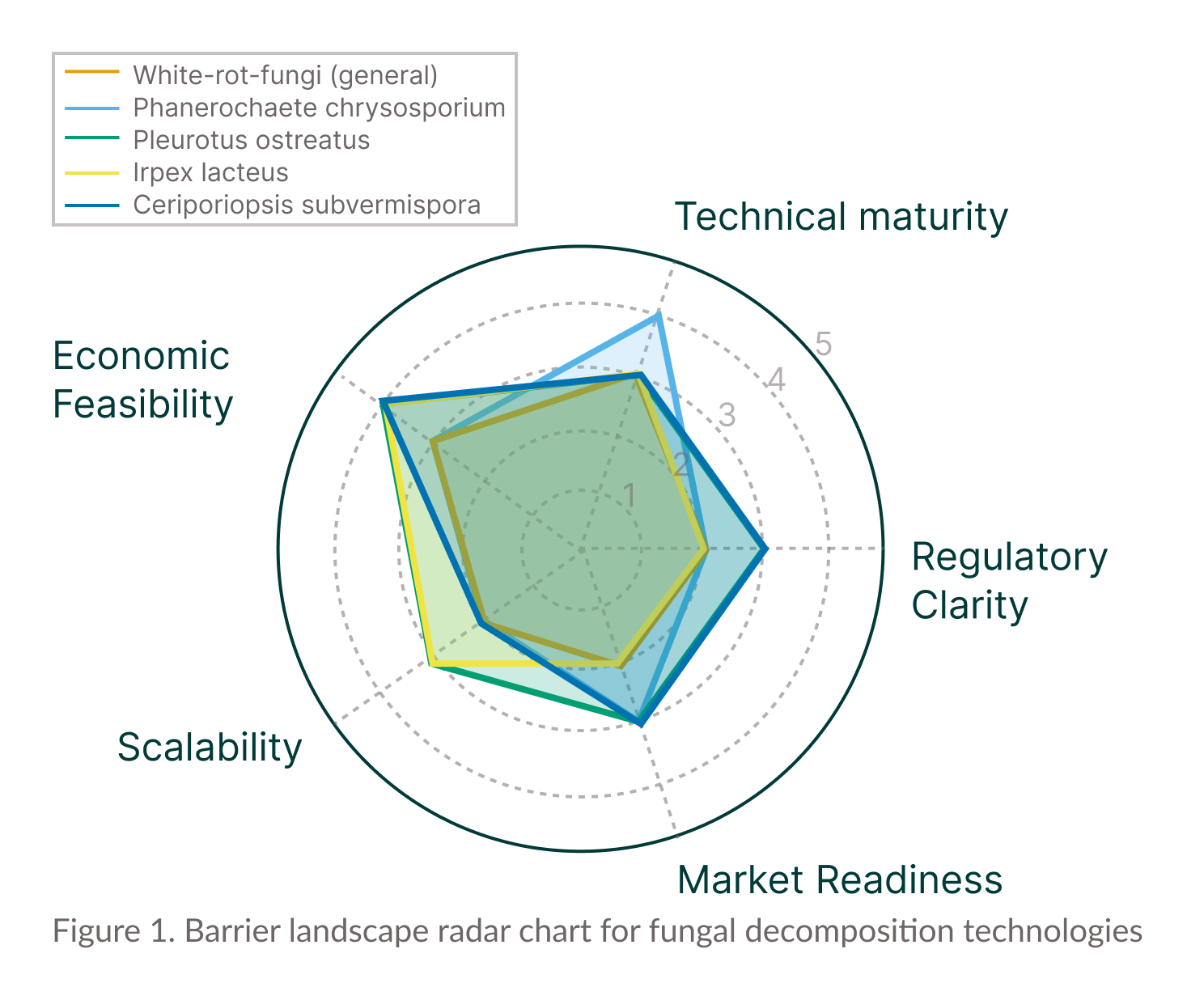
- Phanerochaete chrysosporium shows the highest technical maturity, but limited scalability and regulatory clarity.
- Pleurotus ostreatus and Irpex lacteus have more balanced profiles, making them promising for applied waste valorization.
- Ceriporiopsis subvermispora stands out for regulatory clarity and market readiness, due to its safer and more selective delignification profile.
- Overall, fungal decomposition remains technically sound but commercially underdeveloped, with scale and regulatory barriers dominating the risk landscape.
- White-rot fungi technical maturity is not the bottleneck; scalability and regulatory clarity dominate the risk landscape, explaining the gap between lab success and commercial deployment.
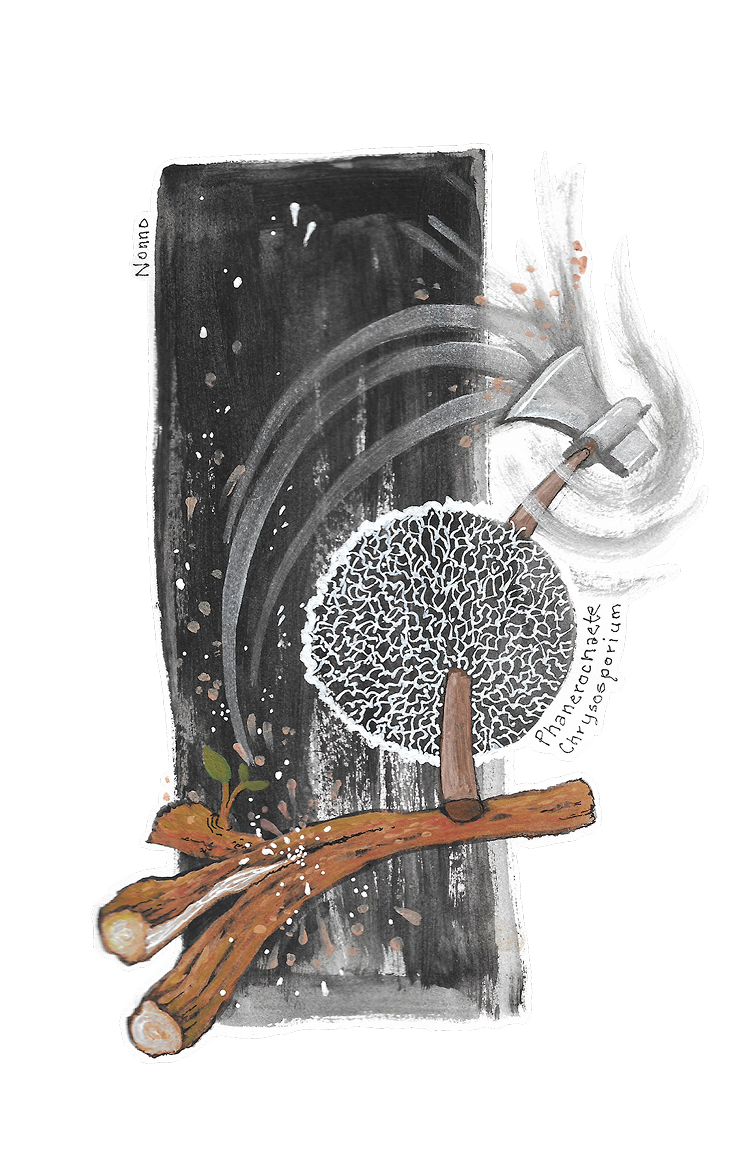
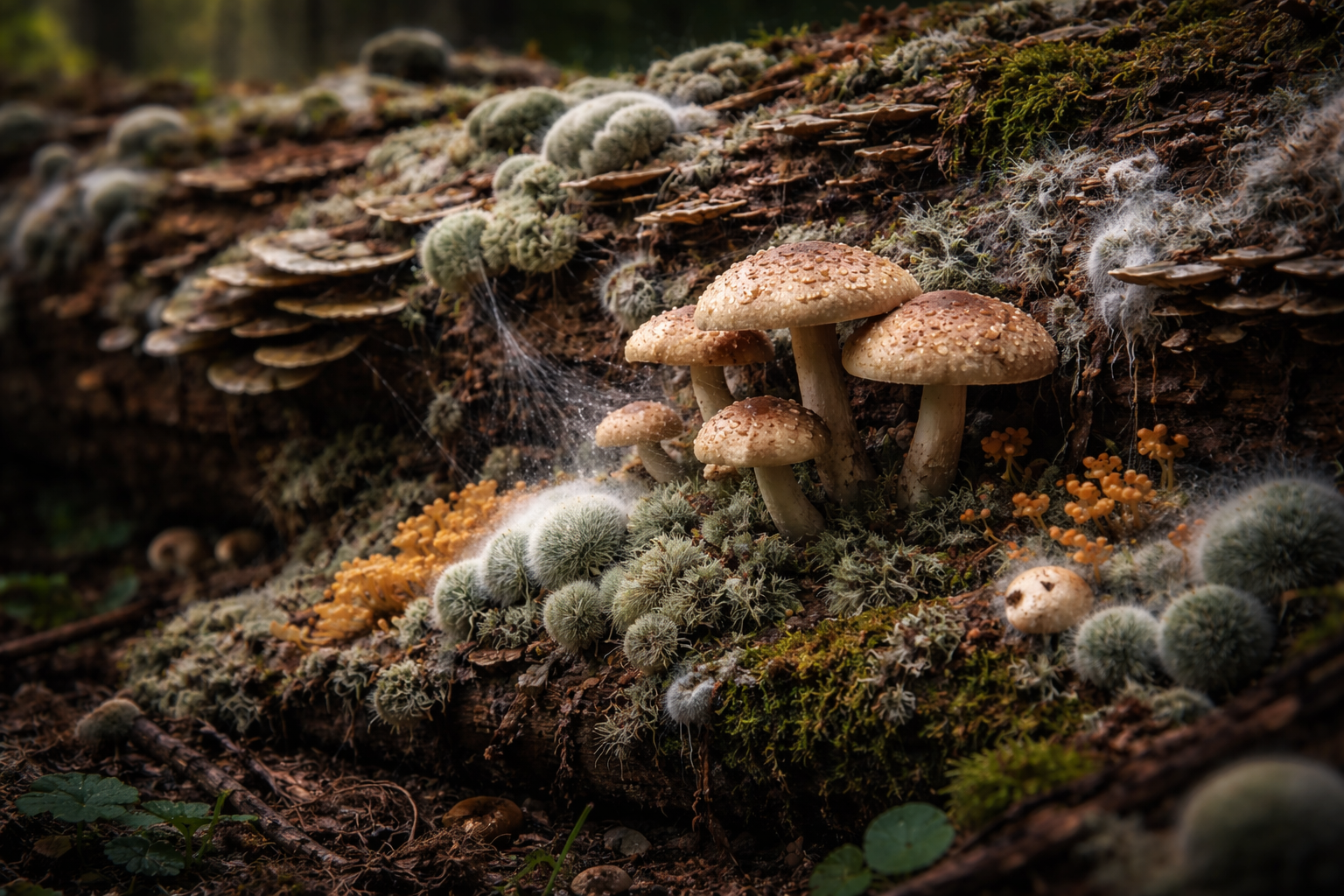
Fungal decomposition in action — fungi breaking down lignocellulosic matter with enzymatic precision, turning rigid biomass into the foundation of new circular value.
In a rural cooperative in Navarra, Spain, smallholder farmers producing cereal crops faced a persistent challenge: large volumes of post-harvest straw and husk residues that were too fibrous for composting and too wet for burning. Instead of paying for costly disposal, the cooperative partnered with a local biotech startup to pilot a fungal pretreatment system using white-rot fungi (Irpex lacteus) under solid-state fermentation (SSF) conditions.
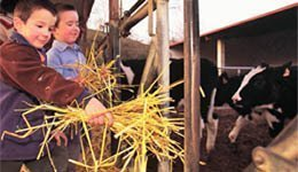
Children feeding cows with hay on a farm.
The process consisted of inoculating moist straw piles (40–60% humidity) with fungal cultures and maintaining aerobic conditions for 10–15 days. During this period, the fungi secreted laccase and lignin peroxidase enzymes, which broke down the lignin barrier and increased the cellulose accessibility of the biomass.
After the treatment, the “pre-softened” material was co-fed into a small anaerobic digester for biogas production. The results were striking: methane yield increased by 25–30%, while the need for mechanical shredding dropped significantly. Farmers also used part of the residual solids as soil amendment, improving organic matter content and water retention.
Adapted from Pallín et al. (2024) Scale-up of fungal pretreatment of wheat straw (Irpex lacteus) under SSF, Waste and Biomass Valorization; Dhiman et al. (2024) Fungal systems for lignocellulose deconstruction, GCB Bioenergy; Kumar et al. (2024) Harnessing the potential of white-rot fungi, Water & Environment Journal.
| Dimension | Outcome |
|---|---|
| Waste Reduction | 100 tons of straw residues treated annually |
| Energy | +25–30% methane yield in digestion phase |
| Environmental | Avoided open burning, reduced CO₂ and CH₄ emissions |
| Economic | ~15% lower operating cost vs. mechanical pretreatment |
| Social | Local job creation, knowledge transfer to farmer groups |
Beyond technical performance, the project demonstrated economic and social benefits: the system required minimal equipment, used locally available fungal strains, and could be operated at community scale without external energy input. This fungal–biogas hybrid model provided both energy and soil health gains—transforming an agricultural disposal problem into a closed-loop, low-cost bioresource system.
Below are three startups applying fermentation technologies to convert organic waste into valuable products. Each represents a distinct pathway within the biological valorization landscape — from anaerobic fermentation and gas fermentation to microbial bioconversion — showcasing how circular innovation can operate across regions and scales.
| Name | Region/ Country | Method | Waste feedstock | Product/value | Stage |
|---|---|---|---|---|---|
| Xilinat | Mexico | Aerobic fermentation for sugar alcohols. Xilinat developed a biotechnological fermentation process that converts corn cobs (olote) — a low-value agricultural residue — into xylitol, a natural low-calorie sweetener. The process uses aerobic microbial fermentation to convert xylose into xylitol, replacing energy-intensive chemical synthesis from wood. | Corn cobs, one of Mexico’s most abundant yet underutilized residues, often burned after harvest. | Avoids emissions from open burning — an estimated 6 tons of CO₂ avoided per ton of xylitol produced. Strengthens rural circular economies by creating income streams for smallholder farmers who supply residues. |
Pilot to early commercial. (2017) |
| Mango Materials | USA | Gas fermentation using methanotrophic bacteria Employs methane fermentation to produce polyhydroxyalkanoate (PHA) — a biodegradable polymer similar to polypropylene. Methane from landfills and wastewater biogas is fed to methanotrophic microbes that convert it into PHA granules under controlled aerobic fermentation. | Biogas methane captured from waste treatment plants and landfills — a greenhouse gas 25× more potent than CO₂. | Reduces methane emissions from waste infrastructure while displacing fossil-based plastics. PHA produced is used in consumer goods (e.g., eyewear, soap cases, and footwear components). Represents a carbon-negative fermentation process integrating waste management and sustainable materials. |
Demonstration / industrial scale-up. |
| NoMy (Norwegian Mycelium) | Norway / Japan | Applies solid-state and submerged fermentation using select filamentous fungi to convert local organic side-streams—such as brewers’ grains, coffee residues, and agricultural by-products—into mycoprotein and bio-based materials. | Converts agricultural byproducts / food waste via proprietary mycelium fermentation into sustainable protein ingredients. | “MycoPrime” protein ingredients for human / animal food supply chains. | Growing operations. |
Together, they illustrate the technical breadth and market versatility of fermentation — from decentralized bio-refineries to industrial bioprocesses — and the kind of innovation opportunities Activae tracks within the Food to Value research series.
Deep tech investors are driving capital toward biotechnologies that link materials, sustainability, and climate impact — positioning fermentation within the broader circular innovation landscape.
| Name | Website | Region/ Country | Size of current fundsSector | Sector | Additional info |
|---|---|---|---|---|---|
| Circular innovation fund | https://circulari nnovation fund.com/ | Canada | EUR 150 M | Food & agriculture | Circular economy, recycling, waste solutions, logistics, distributions |
| Circulate capital | https://www.ci rculatecap ital.com/ | Singapore | EUR 25 M | Food & agriculture | Preventing oceans plastic, waste management and recycling |
| Indico capital partners | https://www.ind icocapita l.com/ | Portugal | EUR 76 M | Food & agriculture | Ocean Tech: Sustainable Aquaculture and Fisheries, Blue BioTech, Digital Ocean, Waste and Circular Economy, Green shipping, Ocean Renewable Energy |
| Structure capital | https://structu re.vc/ | USA | – | Food & agriculture | All related to zero waste |
| AgriTech hubs | http://agritech hub.com/ | Poland | – | Food & agriculture | – |
| Flora ventures | https://www.flor avc.com/ | Israel | EUR 80 M | Food & agriculture | Sustainable agrifood startups |
| Ventures platform | https://www.ven turespla tform.com/portfolio | Nigeria | EUR 40 M | Food & agriculture | Fintech, Edtech, Agritech, Food Science, Healthtech, Bioscience, Enterprise SaaS and digital infrastructure |
For early-stage startups, grants remain critical to bridge research and market readiness, enabling the validation and scaling of fermentation-based solutions.
| Program | Region/ Country | Stage | Website | Amount | Description |
|---|---|---|---|---|---|
| Big Small Business Project | Serbia | Grant | https://velikamal aprivreda.rs/en/grants/ | – | The USAID Big Small Businesses Project, led by ACDI/VOCA and partners, supports Serbian MSMEs in Agriculture & Food and Equipment & Machinery, promoting integration into higher-value markets and sustainable, inclusive growth. Through the TPI APS 2023-01 grant program, the project seeks private-sector partners to co-create market-driven solutions that advance digitalization, green innovation, and opportunities for women and youth. EOIs are open from June 21, 2023, to April 30, 2024. |
| Op Zuid | Netherlands | Grant | https://innovenci o.nl/op-zuid-efro/ | 1M EUR | Regional grant funded by the European Regional Development Fund (ERDF) and distributed through OP Zuid, aiming to leverage the local innovation ecosystem in southern Netherlands to create economic and social impact in energy, climate, raw materials, agriculture, food, and health. |
| Young Agririan | Czech republic | Government, Grant | https://www.szif.c z/cs/prv2014-611 | 45k EUR | The Czech Republic has a tradition of supporting young agricultural entrepreneurs. In 2015-2020 support for young agrarian entrepreneurs is being provided via EU funding for persons interested in starting their entrepreneur activity in agriculture up to 40 years of age. The maximum subsidy is up to 45 000 EUR. |
Fungal decomposition exemplifies how biological intelligence can redefine waste as a source of value. What began as a natural process of decay is now becoming a foundation for circular industries that merge ecology, technology, and market logic. Across regions, startups are proving that fungi can convert local residues into energy, materials, and climate solutions—while investors and grant programs are starting to recognize their potential to scale low-carbon innovation. The next challenge is alignment: connecting science, capital, and policy to unlock the full potential of this living technology in building regenerative, future-ready economies.
Key insights
- Fungal decomposition stands out as one of nature’s most sophisticated and undervalued biological systems, capable of breaking down complex organic matter, recycling nutrients, and stabilizing carbon within soils.
- White-rot fungi such as Phanerochaete chrysosporium, Pleurotus ostreatus, and Irpex lacteus show strong technical maturity, but scalability and regulatory clarity still define the main risk landscape.
- Fungal decomposition is shifting from ecological process to scalable circular solution, linking natural carbon cycles with industrial value creation and attracting startups, investors, and public funding.
- Case studies demonstrate real-world performance, such as community-scale pilots using Irpex lacteus that improved biogas yields by 25–30% and reduced operating costs by around 15%.
- Emerging startups like Mycocycle, Biohm, Typcal, Mycotech, and Dharaksha are translating fungal processes into tangible market applications—from waste detoxification and biomaterials to food protein and packaging—showing the growing potential of this circular biotechnology.
If you’re a startup refining your strategy to scale, structuring your data room, or tackling manufacturing challenges—or an investor seeking technical diligence to de-risk a thesis or explore new spaces in the circular bioeconomy—we can help. Let’s connect to turn organic waste into local value.
References
[1] Kaza et al. (2018) What a Waste 2.0, World Bank.
[2] Eurostat (2024). Waste Generation in Europe.
[3] Christian et al. (2017). Reviews on Environmental Science and Bio/Technology.
[4] Bakan et al. (2021). Waste and Biomass Valorization.
[5] Lal (2008). Soil carbon stocks and their role in the global carbon cycle.
[6] Lehmann & Kleber (2015). The contentious nature of soil organic matter.
[7] Schmidt et al. (2011). Persistence of soil organic matter as an ecosystem property.
[8] Frontiers in Forests and Global Change (2022). Cellulose decomposition and fungal gene abundance.
[9] Nature Climate Change (2021). Fungal community shifts and carbon cycle processes.
[10] LibreTexts Biology (2024). Fungal habitats, decomposition, and nutrient recycling.
[11] ScienceDirect (2024). Interactions of soil organic matter, microbial activity, and mineral protection.
Table 1. Comparison of specific fungi
Isroi et al. (2011). Biological Pretreatment of Lignocellulosic Biomass with White-Rot Fungi: A Review. BioResources, North Carolina State University.
NREL (2022). White-Rot Fungi for Biomass Delignification: Opportunities for Low-Energy Pretreatment. National Renewable Energy Laboratory (NREL), U.S. Department of Energy.
Bari et al. (2015). White-Rot Fungi: Biomechanisms of Lignin Degradation in Wood. USDA Forest Products Laboratory Technical Paper.
Dhiman et al. (2024). Fungal Systems for Lignocellulose Deconstruction: From Mechanisms to Applications. GCB Bioenergy, Wiley Online Library.
Kumar et al. (2024). Harnessing the Potential of White-Rot Fungi and Ligninolytic Enzymes for Biomass Valorization. Water & Environment Journal, Wiley Online Library.
Figure 1.
Pallín et al. (2024). Scale-Up of Fungal Pretreatment of Wheat Straw Using Irpex lacteus under Solid-State Fermentation. Waste and Biomass Valorization, SpringerLink.
Vieira et al. (2025). Fungal Coculture: Efficient Strategies for Lignocellulosic Biomass Degradation. Microorganisms, MDPI.
Scott & Akhtar (2024). Trametes versicolor and Phanerochaete chrysosporium in Comparative Lignin Biodegradation. Bioresource Technology Reports, Elsevier.
Hatakka & Hammel (2022). Fungal Biodegradation of Lignin. In The Fungal Kingdom, ASM Press.
Table 2
ChainCraft B.V. (2024); Wang et al. (2023) Advances in MCCA production via chain elongation. Chemosphere.
Xilinat (2024); Christian & Lohri (2017) Treatment technologies for urban solid biowaste to create value products. Reviews on Environmental Science & Biotechnology.
Mango Materials (2024); Resch et al. (2025) Upstream considerations for gas fermentation processes. Current Opinion in Biotechnology.
Authors

Maria Lozoya
Associate emerging technologies

Diego Santamaria Razo
Managing Director
Related Posts
Advanced Materials and Critical Minerals: The Supply Chains Powering the Energy Transition
Following the narrative developed throughout this energy series, we established…
From Technology Race to System Coordination: How Energy Innovation Organizes Around Clusters
For years, the energy transition was framed as a technological…
From a global challenge to local bottlenecks
As global energy demand continues to rise, energy infrastructure is…