
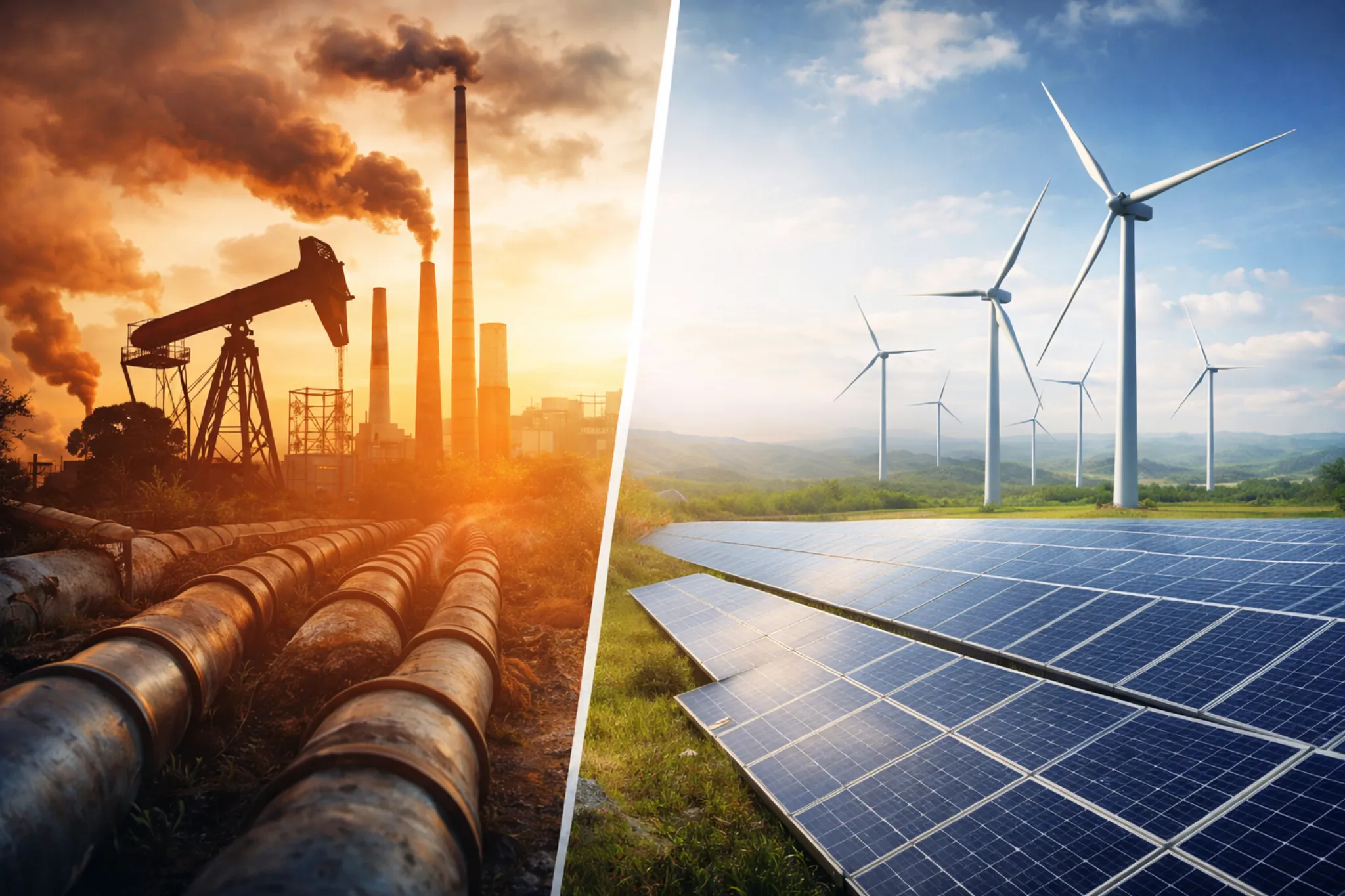
Energy in a Changing Global System: Infrastructure, Materials, AI, and Innovation
The global energy system is undergoing a structural redesign, driven by physical, economic, and technological constraints.
Energy has moved from being a necessary input to becoming a visible constraint on economic activity, infrastructure planning, and technology deployment. What was once assumed to be abundant and reliable has increasingly emerged as a limiting factor across industries, regions, and value chains.
A notable example is the Paris Agreement, adopted in 2015, which established a global framework to limit temperature increase by reducing greenhouse gas emissions and accelerating the transition toward low-carbon energy systems.1 Beyond its climate objectives, the agreement reflected a broader understanding that long-term economic stability is closely linked to how energy is produced, distributed, and consumed. Several countries had already begun addressing energy system constraints. China, for instance, initiated large-scale investments in renewable energy, grid infrastructure, and industrial energy efficiency in the early 2000s. These efforts were driven by a combination of energy security concerns, air-quality challenges, and industrial competitiveness considerations, highlighting how energy strategy and economic development have long been intertwined.
The United States has applied a series of energy and climate policy reforms designed at directing the country to a clean, secure, and affordable energy system, while supporting a net-zero path and helping to job creation and economic inclusion. As the world’s second-largest consumer of energy and emitter of carbon dioxide (CO₂)2, they play a critical role in global technology and innovation. Significant expansion in clean energy investment has
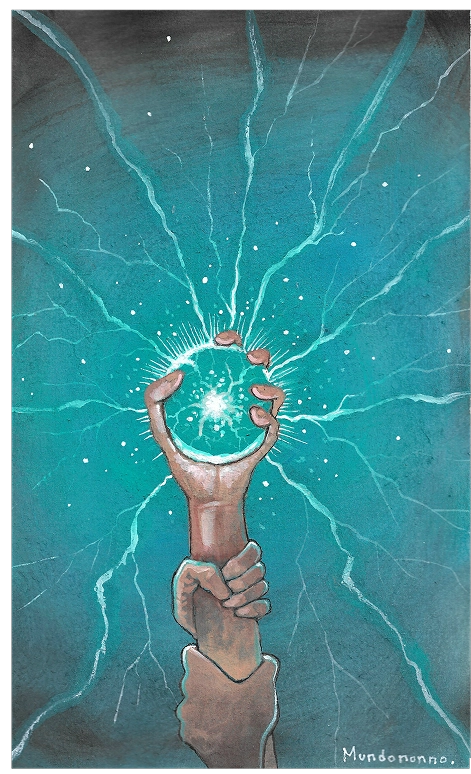
E1- Comunidad
In this image, energy is not just power—it’s potential held in common. One hand reaches, the other supports: a reminder that building the future of energy is a shared effort, grounded in solidarity and human connection.
positioned The US as a leading market for renewable energy, battery manufacturing, electrolysers, heat pumps, and electric vehicle (EV)3, plus they remain the world’s largest producer of biofuels.4
The United States has supported significant investment across multiple energy pathways, including renewable energy capacity, nuclear lifetime extensions and new builds, and low-carbon fuels. However, recent legislative shifts have introduced uncertainty around long-term decarbonization, with several clean energy programs facing rollbacks or reduced support, for example the 2023 Fiscal Responsibility Act, which weakened key environmental review processes under NEPA and fast-tracked fossil fuel infrastructure such as the Mountain Valley Pipeline—signaling a legislative pivot toward expanded domestic fossil energy development. While the country continues to position itself as a global energy leader, there has been a growing emphasis on expanding domestic fossil fuel production.5
In Europe, structural vulnerabilities in the energy system became particularly visible during the 2022 energy crisis, which followed the conflict between Russia and Ukraine. The disruption of gas flows exposed the extent of Europe’s dependence on external energy sources, at the time, approximately 54% of the European Union’s energy consumption relied on imports, largely fossil fuels. This dependency translated rapidly into sharp price increases, supply uncertainty, and operational challenges for households, industry, and public services.6 In response, the European Union introduced a series of emergency measures in 2022 aimed at stabilising energy markets, securing gas supplies for winter periods, and mitigating price impacts. These short-term interventions were followed by a more structural response. In May 2022, the European Commission presented REPowerEU, a plan designed to reduce dependence on Russian fossil fuels by accelerating the clean energy transition, diversifying supply sources, and strengthening energy system resilience. Building on this approach, in February 2025 the Commission introduced a new action plan focused on reducing energy costs, completing the Energy Union, attracting investment, and improving preparedness for future energy disruptions.6
Since the launch of REPowerEU, several system-level outcomes have been observed. Natural gas consumption in the EU has declined by approximately 18%, dependence on Russian fossil fuels has been significantly reduced, and security of supply has been maintained during critical periods.6 For the first time, electricity generation from wind and solar surpassed gas-fired generation, while renewable energy deployment accelerated across multiple member states.6
Taken together, these developments illustrate how energy policy has evolved from a primarily climate- focused agenda into a broader effort to address system resilience, affordability, and long-term competitiveness. The core challenge is building energy systems that are robust, flexible, and capable of supporting economic activity under changing global conditions.
This shift reflects a broader global reordering. As Jeff Currie explained in his article: we are entering what can be described as a New Joule Order, a context in which economic and strategic relevance is increasingly shaped by control over energy systems, electrons, molecules, materials, and the infrastructure that connects them.7 As a result, energy has moved to the centre of global economic and industrial discussions, featuring prominently in forums such as the World Economic Forum. The New Joule Order ultimately describes this structural reconfiguration, a world in which economic and industrial outcomes are shaped by the ability to mobilise capital, execute large-scale infrastructure projects, and coordinate energy systems across electricity, molecules, and materials.3 Energy relevance has expanded beyond climate or price considerations, positioning energy system design as a central determinant of growth, resilience, and technological leadership.6
At the same time, the rapid scale-up of renewable energy has highlighted new system constraints. Electricity from wind and solar is produced when natural conditions allow it and where generation assets are located, not necessarily when or where demand occurs. This temporal and geographic mismatch has turned variability, grid congestion, and curtailment into system-level challenges. Addressing these constraints requires advances beyond generation itself, particularly in energy storage, transport infrastructure, system flexibility, grid intelligence, and sector integration. Solutions that are effective in one context cannot always be replicated directly in another. Progress depends on understanding local system needs and leveraging the materials, products, infrastructure, and capabilities available in each region, while applying shared system principles at a global level.

E2- Solution
Innovation feeds on curiosity, but scaling it demands cooperation. These pigs may look playful—but each one holds a piece of the solution, and together they channel energy into something greater than themselves.
More broadly, the global energy system is entering a phase in which energy is defined primarily by the ability to design, develop, deploy (this covers finance and build), and operate profitable energy systems at scale. Structurally rising electricity demand, driven by electrification, digital infrastructure, AI growth, and industrial transformation, combined with the declining flexibility of legacy systems, has turned energy into a binding constraint rather than a passive input.
Competitiveness depends on system reliability, infrastructure readiness, and the capacity to deploy long-term capital. Energy systems are becoming more capital-intensive, more interconnected, and more sensitive to timing and location mismatches between supply and demand. Grids, storage, transport infrastructure, and critical materials now play a role as decisive as generation itself.
Within this contextual framework, stakeholders are already developing and in some cases deploying solutions designed to operate at system scale. Across different regions, ventures are addressing storage, transport, flexibility, and integration challenges by enabling energy systems to function under these new constraints.
For example, the following startups represent illustrative set of ventures working in solutions that aim to solve critical challenges across the energy value chain. A deeper, but still non-exhaustive exploration will follow in the next articles, with focus on different regions and levels of the energy market.

Spark develops technologies for affordable, scalable, and sustainable e-fuel production to support net-zero aviation today. Its proprietary production process requires less energy, achieves higher fuel yields, and significantly reduces hydrogen storage needs, resulting in a substantial reduction in overall process costs. (Germany)

VoltaSe Energy develops advanced heat battery systems using salt-based phase change materials to store and dispatch renewable energy as high-temperature heat. Their modular technology enables industries to decouple heat generation from electricity use—improving energy flexibility, reducing fossil fuel dependence, and accelerating industrial decarbonization. (Italy)

Iron Fuel Technology (RIFT) develops a clean energy system that uses iron powder as a recyclable fuel to generate high-temperature heat without emitting CO₂. When burned, the iron releases energy and turns into iron oxide, which can be regenerated using green hydrogen—enabling a circular, carbon-free fuel cycle suitable for industrial applications. (Netherlands)

Exergy delivers modular, scalable energy conversion systems that transform unused thermal energy into usable power. The company specializes in the design and manufacturing of Organic Rankine Cycle (ORC) systems, which convert low- to medium-temperature heat—such as industrial waste heat or renewable thermal sources—into electricity. (Japan)

A deep-tech startup transforming waste tires into hard-carbon additives for batteries, aiming to support sustainable battery materials development and traceable recycling pathways. This approach has potential relevance for improving energy storage materials and supply chain sustainability — a key constraint in scaling storage technologies globally. (Chile)

Aikido’s versatile technology allows wind turbines to be deployed offshore at scale. Energy providers can now unlock deep-water resources and energize their projects more quickly and cost-effectively. (USA)
The growing relevance of energy reflects a system operating under new and complex constraints. As demand, infrastructure, and capital diverge from legacy models, solutions must be designed to operate at scale, over long horizons, and across multiple layers of the value chain.
If you are developing a technology at the frontier of the energy transition and want to increase its real-world impact, Activae operates at the intersection of investment, industry, and science to help DeepTech ventures scale. We support founders, investors, and mission-driven organizations by connecting capital with credible technologies, aligning technological potential with industrial needs, and translating innovation into strategies that can meet the structural challenges of the energy transition. Whether you are shaping an investment agenda, de-risking a DeepTech opportunity, or turning strong technology into an investable venture, we partner with you to move from vision to execution.
If the energy challenge is structural, the response must be collective. The technologies are emerging—what matters next is how we scale them.
References
[1] UNFCCC (2015). The Paris Agreement. United Nations Framework Convention on Climate Change.
[2] Worldometer (2024). World CO₂ Emissions by Country.
[3] International Energy Agency (IEA) (2024). United States 2024 – Executive Summary.
[4] Our World in Data (2024). Global Bioenergy and Biofuels Production.
[5] The White House (2023). Fact Sheet: President Biden Announces Bipartisan Budget Agreement. May 28, 2023.
[6] European Commission (2024). EU action to address the energy crisis.
[7] The Carlyle Group (2025). The New Joule Order.
Authors

Maria Lozoya
Associate emerging technologies

Diego Santamaria Razo
Managing Director
Related Posts

Advanced Materials and Critical Minerals: The Supply Chains Powering the Energy Transition
Following the narrative developed throughout this energy series, we established…
From Technology Race to System Coordination: How Energy Innovation Organizes Around Clusters
For years, the energy transition was framed as a technological…

From a global challenge to local bottlenecks
As global energy demand continues to rise, energy infrastructure is…