

Advanced Materials and Critical Minerals: The Supply Chains Powering the Energy Transition
Following the narrative developed throughout this energy series, we established that the energy transition extends beyond the deployment of new generation technologies. It also depends on materials, supply chains, and industrial capabilities. In the emerging energy system, access to materials is synonym of controlling the energy market.
Within this transition, different technologies rely on specific sets of materials: batteries, wind turbines, electrical cables, electrolysers, nuclear systems, and other energy infrastructures each depend on particular minerals and material inputs. This dependency, however, does not mean that the transition is constrained to the materials currently in use because the field remains open to exploring new technological pathways and material innovations.
As electrification expands across sectors, demand for certain minerals and energy inputs will grow significantly. This trend creates both supply challenges and opportunities for innovation in materials science, extraction processes, and alternative chemistries.
One of the most defining trends of the energy transition is the rapid growth in demand for critical materials driven by electrification. As economies shift from fossil-fuel based systems toward electricity-based infrastructures, the resource foundation of the energy system changes fundamentally. Traditional energy systems relied primarily on fuels such as oil, coal, and natural gas, which are extracted, transported, and consumed. Electrified systems, by contrast, rely heavily on materials embedded in technologies—batteries, wind power systems, solar photovoltaic modules, power transmission cables, transformers, and electrolysers. Electric vehicles require significantly larger volumes of critical minerals than conventional internal combustion cars, while renewable generation technologies and grid infrastructure demand large quantities of copper, aluminum, silicon, rare earth elements, lithium, nickel, and graphite. As electrification expands across transport, industry, buildings, and digital infrastructure, global demand for several of these minerals is expected to increase dramatically over the coming decades. This shift effectively moves the energy system toward a materials-intensive model, where the availability, processing capacity, and geopolitical distribution of critical minerals become key factors shaping the pace and structure of the energy transition.
Another defining trend in the energy transition is the strong geographic concentration of critical mineral supply chains. Many of the materials required for energy technologies are produced in a limited number of regions, creating structural dependencies within the global system. Lithium resources are largely concentrated in Australia and the South American “lithium triangle” of Chile, Argentina, and Bolivia, cobalt production is dominated by the Democratic Republic of Congo, and significant shares of nickel supply come from Indonesia and the Philippines. Rare earth elements and graphite production are also heavily concentrated.
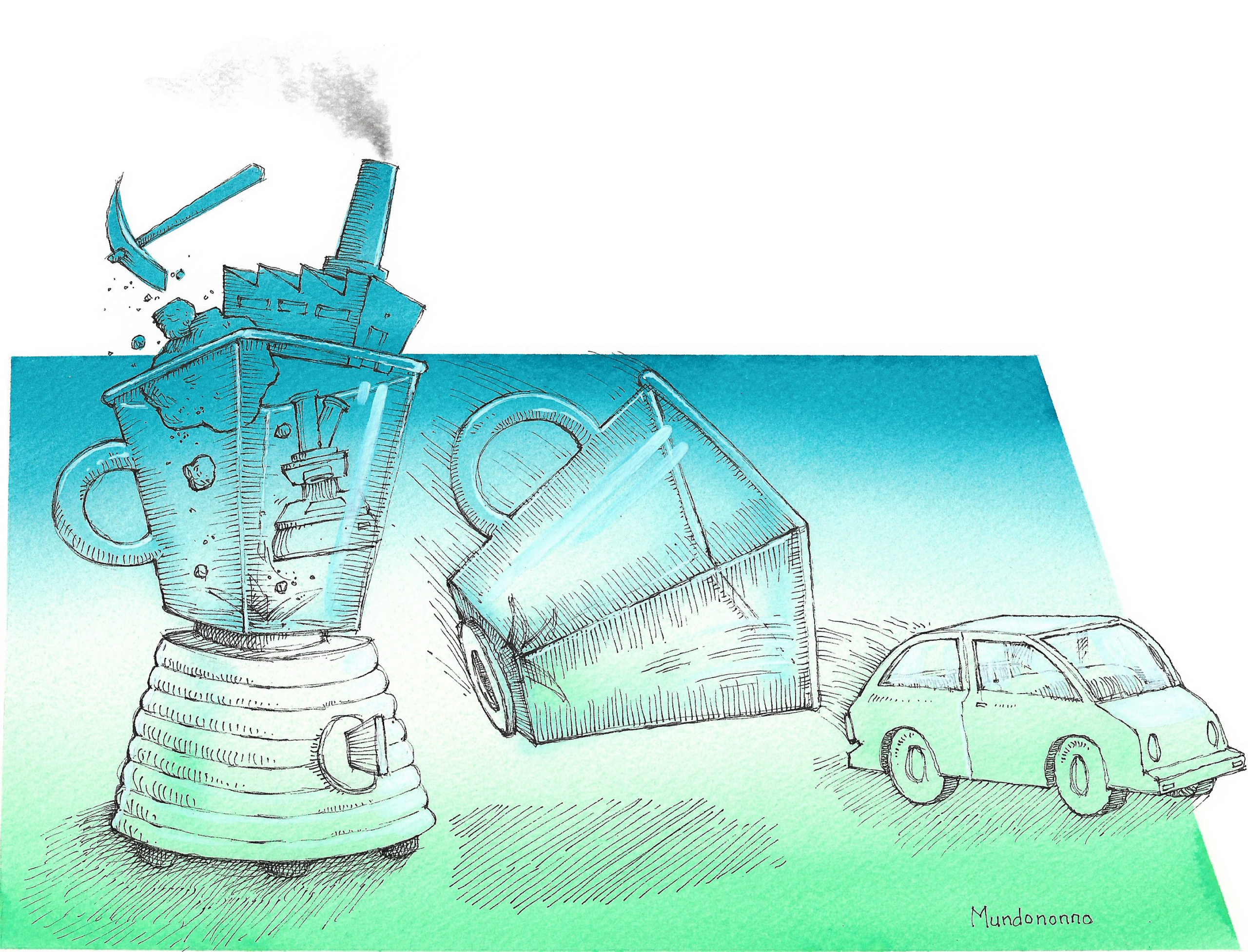
Blender – It talks about the result of mixing materials with research work and that results in some product that consumes energy.
Beyond extraction, the concentration becomes even more pronounced at the processing and refining stages, where a small number of countries control the transformation of raw materials into usable industrial inputs. In particular, China has developed a dominant position across several critical mineral processing chains, including rare earth elements, lithium chemicals, and graphite refining. As a result, the energy transition depends both on the physical availability and on the geographic structure of supply chains, which increasingly shapes industrial policy, trade relations, and strategic investment decisions across major economies.
A third critical trend shaping the energy transition is the growing importance of processing and refining capacity within mineral supply chains. While the geographic distribution of mineral deposits often receives most attention, the true bottleneck frequently emerges at the stage where raw materials are transformed into industrial-grade inputs. Extracted minerals typically require multiple processing steps—such as concentration, chemical conversion, and purification—before they can be used in batteries, magnets, solar panels, or other energy technologies. These processing activities demand specialized facilities, technical expertise, and large-scale industrial infrastructure. As a result, refining capacity has become highly concentrated in a limited number of countries. In many cases, minerals mined in one region are shipped elsewhere for processing before entering global manufacturing supply chains. This dynamic means that the ability to refine and process materials at scale often determines who captures the most strategic and economic value, and it can also become a critical point of vulnerability in the deployment of energy technologies. Consequently, several governments and industries are now prioritizing the development of domestic or regional processing capabilities as part of broader efforts to strengthen energy and industrial resilience.
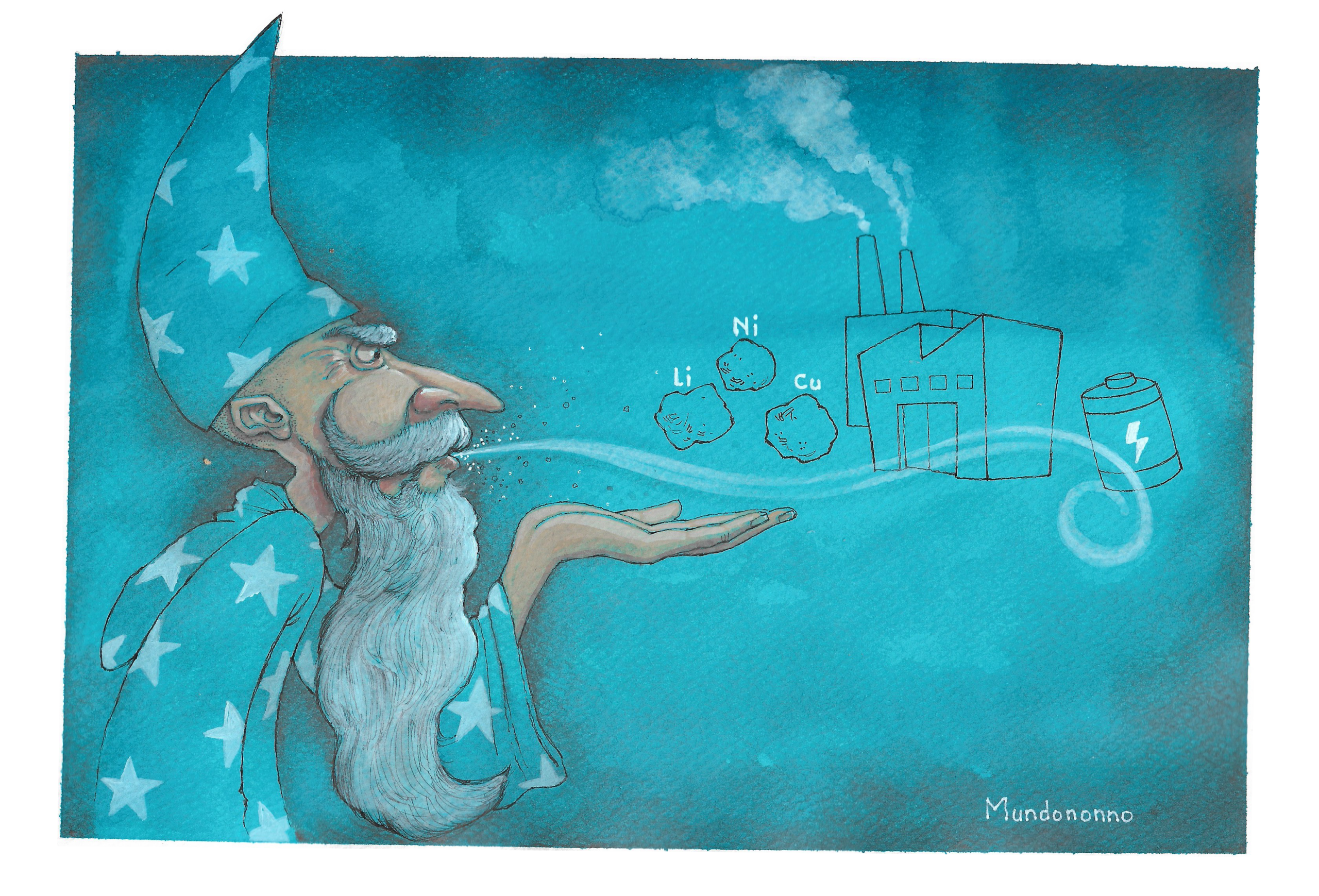
The wizard – It aims to convey that getting the parties to come together and produce results is like magic.
Different energy technologies rely on specific sets of materials. Understanding which minerals underpin each system—and where they are produced and processed—helps reveal the structural dependencies shaping the energy transition.
| Energy systems | Key material | Main use | Key producing regions | Strategic relevance |
|---|---|---|---|---|
| Batteries & energy storage | Lithium | Cathodes in lithium-ion batteries for EVs and grid storage | Australia, Chile, Argentina | Extremely high demand growth driven by EVs and storage |
| Nickel | High-energy battery cathodes (NMC, NCA) | Indonesia, Philippines, Russia, Canada | Important for high-energy batteries; supply concentration risk | |
| Cobalt | Battery cathodes stabilizing high-energy chemistries | Democratic Republic of Congo (DRC) (~70%) | High geopolitical and ethical supply risk | |
| Graphite | Battery anodes (natural and synthetic graphite) | China, Mozambique, Madagascar | Essential for batteries; strong Chinese dominance | |
| Graphite | Battery anodes (natural and synthetic graphite) | China, Mozambique, Madagascar | Essential for batteries; strong Chinese dominance | |
| Power grids & electrification | Copper | Power cables, transformers, motors, renewable infrastructure | Chile, Peru, China, DRC | One of the main bottlenecks of electrification |
| Aluminum | Transmission lines, lightweight power infrastructure | China, Russia, Canada, India | Important alternative to copper in grids | |
| Solar energy | Silicon (polysilicon) | Photovoltaic cells and wafers | China, Germany, Malaysia | Critical input for solar PV supply chains |
| Wind energy | Rare earth elements (Neodymium, Dysprosium, Praseodymium) | Permanent magnets in wind turbine generators | China, Australia, Myanmar | Highly concentrated supply chain |
| Hydrogen & electrolysis | Platinum | Catalysts in fuel cells and electrolysers | South Africa (~70%), Russia | Critical for hydrogen technologies |
| Iridium | Catalysts for PEM electrolysers | South Africa | Major bottleneck for large-scale hydrogen deployment | |
| Nuclear energy | Uranium | Nuclear fuel | Kazakhstan, Canada, Australia | Strategic for nuclear power expansion |
| Zirconium | Nuclear fuel rod cladding | Australia, South Africa | Essential for nuclear reactor safety |
As electrification expands across transport, industry, buildings, and digital infrastructure, these materials become increasingly central to the functioning of modern energy systems. The challenge is therefore not limited to discovering new mineral resources, but also to building the industrial capacity required to process, refine, and integrate them into energy technologies at scale. In many cases, the true constraints of the transition lie not in geological scarcity but in industrial capability, supply chain concentration, and the pace at which processing infrastructure can expand.
This reality is reshaping the strategic landscape. Governments, industries, and investors are beginning to treat critical minerals as foundational assets for economic competitiveness, technological leadership, and energy security. Initiatives such as the European Critical Raw Materials Act, the United States’ Inflation Reduction Act, and similar policies in other regions reflect a growing recognition that energy systems are deeply intertwined with material supply chains.
In this context, the energy transition should be understood not only as a transformation of how energy is produced, but also as a transformation of how materials are sourced, processed, traded, and recycled. Innovation in extraction technologies, alternative chemistries, recycling systems, and material efficiency will play a crucial role in determining how quickly and sustainably new energy systems can scale.
Across the global innovation ecosystem, a growing number of ventures are emerging to address these challenges. Working across different segments of the material value chain, from mineral discovery and extraction to advanced materials, industrial processing, and circular recovery systems—these startups illustrate how technological innovation is beginning to reshape the material foundations of the energy transition.
1. Exploration & discovery of critical minerals


Beholder (Tallin, Estonia):
Beholder has developed an AI for the quick, precise and sustainable exploration of critical mineral deposits, enabling geological research to be upscaled. This state of the art neural network combines 49 data inputs over 200 models to make efficient predictions of mineral deposits with an up to 96% accuracy rate.
Hochschild Mining (Lima, Peru):
Hochschild Mining is exploring rare earth element resources in Peru, aiming to expand the supply of critical materials required for clean energy technologies and advanced electronics.

Voluna (London, United Kingdom): Develops neutron-based sensing technology deployed via drones to generate real-time subsurface geochemical maps, enabling faster and more precise exploration of critical mineral deposits.
KoBold Metals (Berkeley, California, United States)
KoBold Metals uses artificial intelligence and advanced geoscience data analysis to accelerate the discovery of critical mineral deposits such as lithium, cobalt, and nickel, aiming to secure the material supply chains required for the energy transition.
2. Extraction & primary production of critical minerals


Vulcan Energy Resources (Alemania/Australia):
Vulcan Energy Resources is developing a project to produce battery-grade lithium from geothermal brine in the Upper Rhine Valley, providing a local and low-carbon source of lithium for Europe’s battery industry while also generating renewable energy.
Sorcia Minerals (Chile):
Sorcia Minerals focuses on developing sustainable extraction technologies for critical minerals used in batteries and renewable energy technologies.
3. Industrial material processing & manufacturing


Hertha Metals (Houston, Texas, Estados Unidos):
Hertha Metals is developing a technology to produce iron and steel using hydrogen and electricity instead of traditional coal-based processes, aiming to reduce emissions and modernize metal production for industrial supply chains.
Boston Metal (Woburn, Massachusetts, Estados Unidos):
Boston Metal is developing an electrolysis-based process to produce steel and other metals using electricity instead of coal. Its technology aims to decarbonize metal production while creating a more flexible and scalable way to refine metals needed for industrial and energy infrastructure.


Brimstone (Oakland, California, Estados Unidos):
Brimstone is developing a new process to produce cement using abundant calcium silicate rocks instead of traditional limestone. Its technology aims to eliminate the CO₂ emissions typically associated with cement production while also generating valuable industrial minerals as byproducts.
Mars materials (Oakland, California, Estados Unidos):
Mars Materials (Mars) transforms carbon into products that clean dirty water, and improve transportation and energy. Our durable products such as carbon fiber, an advanced material used in hundreds of products — from textiles to electronics — have many applications with impactful co-benefits.
4. Advanced materials for batteries & electrification


Verkor (Francia):
Verkor is developing and manufacturing lithium-ion batteries for electric vehicles and large-scale energy storage. The company aims to build a strong European battery supply chain to support electrification and reduce dependence on imported battery technologies and materials.
Rivus Batteries (Göteborg, Sweden):
Rivus is commercialising a proprietary, water-based organic electrolyte manufactured from widely-available bulk chemicals in standard European chemical plants. The electrolyte functions as a direct replacement for vanadium in commercially-available flow-battery hardware.


Nexeon (Kangawa, Japan):
Nexeon develops silicon-based anode materials for lithium-ion batteries, enabling higher energy density and improved performance for electric vehicles and energy storage systems.
Storedot (Herzliya, Israel):
StoreDot develops advanced battery technologies designed for ultra-fast charging electric vehicles, using innovative materials to significantly reduce charging times.

TS Conductor (Huntington Beach, California, Estados Unidos):
TS Conductor enables utilities to double or triple capacity while improving reliability and affordability. A modest conductor price premium is more than offset by time and money saved on structures for both new lines and reconductoring projects.
Hysus (Galicia, Spain):
Hysun develops solar-driven thermochemical systems to produce clean hydrogen. Its approach aims to reduce the cost and energy requirements of hydrogen production while enabling large-scale deployment of hydrogen technologies.
5. Recycling & circular supply chains for critical materials


Catalyco (Riga, Latvia):
Catalyco develops technologies to recover zinc from industrial waste streams and convert it into high-purity zinc oxide. By transforming waste materials into valuable industrial inputs, the company helps create circular supply chains for critical materials while reducing environmental impact and the need for new raw material extraction.
Mecaware (France):
Mecaware develops innovative hydrometallurgical processes to recover critical metals such as lithium, cobalt, and nickel from battery waste. Its technology aims to create circular supply chains for battery materials while reducing the environmental impact of mining.


Niu Niu (Guadalajara, Mexico):
Niu Niu develops modular battery systems that enable the reuse and repurposing of electric vehicle batteries for stationary energy storage. Its technology helps extend battery lifecycles and supports circular supply chains for critical materials used in the energy transition.
Energy source (Brazil):
Energy Source develops technologies to recycle lithium-ion batteries and recover valuable materials such as lithium, nickel, and cobalt. Its processes aim to create circular supply chains for battery materials while reducing the environmental impact of battery waste.


Lohum (India):
Lohum develops technologies to recycle lithium-ion batteries and recover critical materials such as lithium, cobalt, and nickel. The company focuses on creating circular supply chains for battery materials in rapidly growing EV markets.
GEM Co. Ltd. (China):
GEM develops technologies to recover and refine critical metals such as cobalt, nickel, and rare earth elements from battery waste and electronic scrap, supporting circular supply chains for energy materials.
Altilium (United Kingdom)
Altilium develops technologies to recycle lithium-ion batteries and recover critical materials such as lithium, nickel, and cobalt, supporting circular supply chains for battery materials used in electric vehicles and energy storage systems.
Understanding the material foundations of the energy transition therefore becomes essential for anyone seeking to navigate the evolving energy landscape—from policymakers and investors to entrepreneurs and industrial leaders.
For founders, investors, and industry leaders, these dynamics open a broad landscape of opportunities. The transformation of energy supply chains requires new technologies across extraction, refining, recycling, and material efficiency, as well as new industrial models capable of scaling them. From advanced processing methods and battery material innovation to circular recovery systems and supply chain analytics, a new generation of ventures is emerging to address the material foundations of the energy transition.
At Activae, we work at the intersection of science, industry, and capital to support DeepTech ventures operating within these complex systems. By connecting technological innovation with industrial needs and long-term investment strategies, we help translate scientific advances into scalable solutions that strengthen the resilience and competitiveness of energy systems. As the global energy landscape evolves, investment logics evolve with it. Activae supports founders, investors, and organizations in shaping robust investment theses and structuring clear data-room narratives that align technological potential with market realities, helping transform emerging innovations into investable opportunities.
In the next articles of this series, we will continue exploring the technologies and ventures shaping different segments of the energy value chain, highlighting the opportunities emerging across regions and sectors as the global energy system evolves.
Authors

Maria Lozoya
Associate emerging technologies

Diego Santamaria Razo
Managing Director
Related Posts
From Technology Race to System Coordination: How Energy Innovation Organizes Around Clusters
For years, the energy transition was framed as a technological…
From a global challenge to local bottlenecks
As global energy demand continues to rise, energy infrastructure is…
Energy in a Changing Global System: Infrastructure, Materials, AI, and Innovation
The global energy system is undergoing a structural redesign, driven…